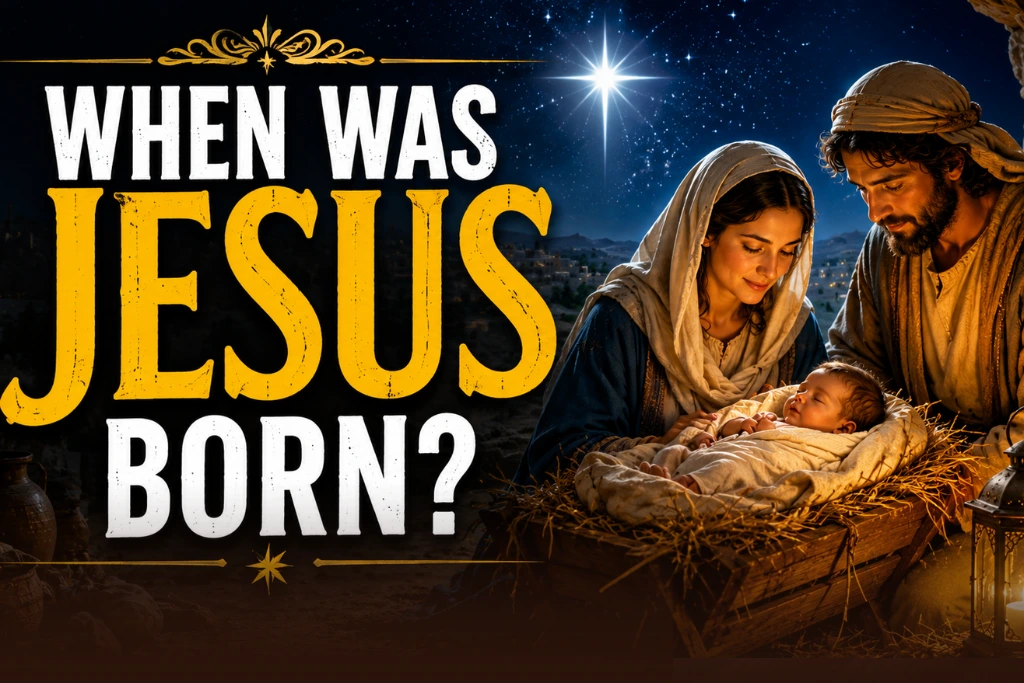
When Was Jesus Born? The Biblical Case for September, Not December 25

When Was Jesus Born

Ask the average person, “When was Jesus born?” and they’ll probably tell you December 25—Christmas. That’s what tradition says. But if you dig into the Scriptures, the simple answer is no. December 25 is not the birthday of the Lord Jesus Christ. All you have to do is a simple search on December 25, and you’ll find it’s the birthday of something pagan. It’s the birthday of the sun god—patterned after Nimrod supposedly reincarnated as Tammuz. So when was Jesus actually born? Let’s find out from the Bible.

We know where Jesus was born—Bethlehem of Judea. The Gospel of Matthew makes that plain. But the question of when Jesus was born is a different matter, and it takes a little more digging. The good news is your Bible gives you the answers. You don’t need astrology, the Talmud, or any weird man-made source. You just need to read the Book.
When Was Jesus Born

A Quick Heart Check About Christmas and Conscience

Before we get into the timeline, I don’t want to crush anyone’s joy. I’ve heard of a Christian brother who rejected Christmas gifts from his unsaved family because he believed Christmas was paganism. Please don’t do that. If someone gives you a gift out of love, receive it.

Romans 14 makes it clear that if you observe a day unto the Lord, that’s between you and God. If your conscience tells you not to celebrate Christmas, don’t violate it. But if you use the season as an opportunity to point people to Jesus—even if the world only thinks about Him once in a blue moon—and you do it unto the Lord, then don’t let anyone judge you for it.

Personally, I don’t set up a Christmas tree or observe the pagan side of the holiday. My church doesn’t observe Christmas either, but we have individuals who do in their own way. Some may use a Christmas theme in ministry. Everyone has their own convictions. So if you love Christmas and use it for the Lord, that’s fine. If you don’t, that’s fine too. That’s Romans 14.

Now let’s open the King James Bible and find the real timeline for the question: when was Jesus actually born?

Clue #1: Shepherds in the Field—Not in Winter

Luke 2:8 says:

“And there were in the same country shepherds abiding in the field, keeping watch over their flock by night.”

Think about it. If Jesus was born on December 25—the cold of winter—those shepherds would have frozen their tails off. In Israel, shepherds did not let their flocks out in the cold season. The flocks were typically out from spring through autumn. They would go from the spring and then close it off to the autumn. That’s just basic shepherding.

So right away, winter is out. That’s our first clue.

Clue #2: When Did Jesus Die, and How Old Was Jesus When He Died?

If you want to figure out when was Jesus born, you have to work backward from when did Jesus die and how old was Jesus when he died. The key is timing His ministry.

Luke 3:23 says Jesus “began to be about thirty years of age” when He was baptized by John the Baptist. That’s a key. John 2:13 says the Jews’ passover was at hand, and Jesus went up to Jerusalem. That was close to the beginning of His ministry.

Now, everyone pretty much agrees Jesus was approximately 33 and a half years old when He died, was buried, and rose again. How do we get that? He died at Passover, which is in the spring. In the Gospel of John, we can identify at least three Passovers during His ministry. That gives us three years. Add the 40 days of temptation after His baptism (Luke 4), the 40 days after His resurrection before His ascension (Acts 1), and the time He spent gathering disciples and preaching in different regions. Put it all together, and you get about six months extra. That’s why we say approximately 33 and a half years.

Now calculate backwards. If Jesus was about 30 years old around the Passover (spring), go back 30 years and you land in the spring. But remember—He began to be 30 a couple months before that Passover. So if you go a couple months behind spring, you hit autumn. Winter doesn’t fit. Spring doesn’t fit as well. Autumn is the best candidate.

Clue #3: The Course of Abia and the Birth of John the Baptist

Luke 1:5 introduces a priest named Zacharias, “of the course of Abia.” That may sound boring, but it’s a big deal. In 1 Chronicles 24, the priests were divided into courses, and the course of Abia was the eighth course. The priests took turns throughout the year, and the eighth course served roughly in June and December.

The angel told Zacharias his wife Elizabeth would bear a son—John the Baptist (Luke 1:13). Verse 24 says after those days Elizabeth conceived. Now notice Luke 1:26:

“And in the sixth month the angel Gabriel was sent from God unto a city of Galilee, named Nazareth, to a virgin espoused to a man whose name was Joseph, of the house of David; and the virgin’s name was Mary.”

So six months after Elizabeth conceived, Gabriel visited Mary. In Luke 1:36, Gabriel tells Mary that her cousin Elizabeth “hath also conceived a son in her old age: and this is the sixth month with her.” Then Mary stayed with Elizabeth about three months (Luke 1:56), likely until John was born.

That gives us a six-month gap between John the Baptist and Jesus.

Now do the math.

If Zacharias’s course was in December, Elizabeth conceived around December, and John would be born around September. Jesus, being six months younger, would be born around March—that’s spring. But from our earlier timeline, autumn fits better than spring.

But if Zacharias’s course was in June, Elizabeth conceived around June, and John would be born around March. Six months later puts Jesus’ birth in September. That’s autumn. That fits perfectly.

So John the Baptist was likely born in March, and Jesus was born in September.

Clue #4: The Feast of Tabernacles and the Word “Dwelt”

John 1:14 says:

“And the Word was made flesh, and dwelt among us.”

That word “dwelt” in Greek is skenoo, which literally means “tabernacled.” The Word was made flesh and tabernacled among us. In 2 Corinthians 5:1, our body is called a tabernacle. So when Jesus took on human flesh, God was tabernacling among men.

Now, what feast did God set up in September? The Feast of Tabernacles. Do you really think God, who established that feast, would say, “Nah, I won’t connect My Son’s birth to that day”? God loves to connect His Son to His appointed times.

Leviticus 23:34-36 tells us the Feast of Tabernacles lasts seven days, and the eighth day is a holy convocation with offerings. Now watch this. Luke 2:21 says:

“And when eight days were accomplished for the circumcising of the child, his name was called JESUS.”

If Jesus was born at the beginning of the Feast of Tabernacles, then the eighth day—the day of His circumcision—fell exactly on the holy convocation, the day when offerings were made. And Mary and Joseph did offer a sacrifice according to the law (Luke 2:24). That’s not a coincidence.

Even the number eight is significant. In the Bible, eight represents a new beginning. Jesus’ birth was the beginning of a new timeline for humanity. Revelation 21:3 says, “Behold, the tabernacle of God is with men, and he will dwell with them.” That is the ultimate fulfillment of the Feast of Tabernacles.

Summary of the Biblical Evidence

Biblical ClueScripture ReferenceWhat It Reveals
Shepherds in the fieldLuke 2:8Flocks were kept out from spring to autumn, not in the cold of winter. Points away from December 25.
Jesus began ministry at 30Luke 3:23Counting backward from His death at Passover and three years of ministry gives a birth date in autumn.
Course of AbiaLuke 1:5; 1 Chronicles 24Zacharias served in the 8th course (June or December). Elizabeth conceived after that, and Mary conceived six months later. June fits a September birth for Jesus.
“Dwelt among us” = tabernacledJohn 1:14The Greek word means “tabernacled.” Connects Jesus’ birth to the Feast of Tabernacles in September.
Eighth-day circumcisionLuke 2:21; Leviticus 23:36If born on the first day of Tabernacles, the eighth day fell on the holy convocation, matching the offering for purification.
The star was not naturalMatthew 2:9; Revelation 1:20The star moved and stood over a house—angelic guidance, not astrology. Points to a biblical timeline, not pagan signs.
Daily Bible VerseBible VersesOfficial Website

“Based on the Scriptures, the most scriptural and best candidate I’ve found is September, likely around the Feast of Tabernacles.”

The Star Was Not Astrology

Some people try to find when was Jesus born by looking at astrological signs. They think the wise men were magi who read the stars. But read your Bible.

Matthew 2:9 says the star “went before them, till it came and stood over where the young child was.” No planetary alignment does that. A normal star doesn’t move around and stand over a specific house. Revelation 1:20 tells us stars are angels. Job 38:7 mentions the morning stars and the sons of God shouting for joy. Numbers 24:17 prophesied, “There shall come a Star out of Jacob, and a Sceptre shall rise out of Israel.”

The wise men knew the Scriptures. They saw the star and came to worship the King. And when the shepherds were in the field, Luke 2:9-14 says an angel appeared, and suddenly there was a multitude of the heavenly host. The word “host” often refers to stars or angels. So that “star” was not a natural star. It was an angelic manifestation.

Stop running to the Talmud, the Dead Sea Scrolls, or astrology to find answers the Bible already gives.

Isaiah 60, Simeon, and the Light to the Gentiles

Isaiah 60:1-3 says:

“Arise, shine; for thy light is come, and the glory of the LORD is risen upon thee. And the Gentiles shall come to thy light, and kings to the brightness of thy rising.”

Verse 6 even mentions camels, gold, and frankincense—sounds like the wise men, doesn’t it? That passage is primarily about the second coming and the millennium, but there is a partial fulfillment in Jesus’ first coming.

In Luke 2:25-32, Simeon, filled with the Holy Ghost, called Jesus “a light to lighten the Gentiles, and the glory of thy people Israel.” That is a direct echo of Isaiah 60. The wise men were Gentiles from the east, bringing gold and frankincense. The first coming had shadows of the second coming.

So, When Was Jesus Actually Born? And When Is Jesus’ Birthday?

Based on the Scriptures, the most scriptural and best candidate I’ve found is September, likely around the Feast of Tabernacles. Some calculate September 22, but I won’t be dogmatic on the exact day. I will say this: it is the best candidate you’ll find in the Bible.

So when is Jesus’ birthday? Not December 25. That date has pagan roots, and it’s not the Lord’s birthday. The biblical timeline points to autumn—likely September, at the Feast of Tabernacles.

But we don’t need to fight over it. If you celebrate Christmas unto the Lord, do it with a clear conscience. If you don’t, don’t violate your conscience. The important thing is that Jesus Christ was born into this earth, took on human flesh, and went through temptations just like we do—so that He could die for our sins and save us from hell.

That’s worth celebrating every day, not just once a year.

If you want to dig deeper into the pagan roots of December 25, I’d recommend:

And most of all—read your King James Bible. It’s beyond amazing. Study it, and you’ll find treasures like this all over the place.

FAQs About Jesus’ Birth

When was Jesus born according to the Bible?
The Bible does not give a specific calendar date, but the clues point strongly to autumn, most likely September, around the time of the Feast of Tabernacles. It was definitely not December 25.

Where was Jesus born?
Jesus was born in Bethlehem of Judea, just as Matthew 2:1 states. That part has never been in question.

When is Jesus’ real birthday?
The best scriptural candidate is September, possibly on the Feast of Tabernacles. Some suggest September 22, but the Bible does not give an exact day.

Why isn’t Jesus’ birthday December 25?
December 25 has pagan roots connected to the sun god and Nimrod supposedly reincarnated as Tammuz. Also, shepherds were in the fields at night when Jesus was born, and they did not keep flocks out in the cold winter months.

How old was Jesus when He died?
Most Bible believers agree Jesus was approximately 33 and a half years old when He died, was buried, and rose again. The Gospel of John records three Passovers during His ministry, which gives us three years, plus additional time before and after.

When did Jesus die?
Jesus died at Passover, which falls in the spring. Working backward from that point and adding His ministry timeline helps us arrive at a September birth.

Was Jesus born on the Feast of Tabernacles?
It is the best fit. John 1:14 says the Word “dwelt” among us, and that word means “tabernacled.” Also, the eighth-day circumcision in Luke 2:21 lines up with the holy convocation on the eighth day of the feast.
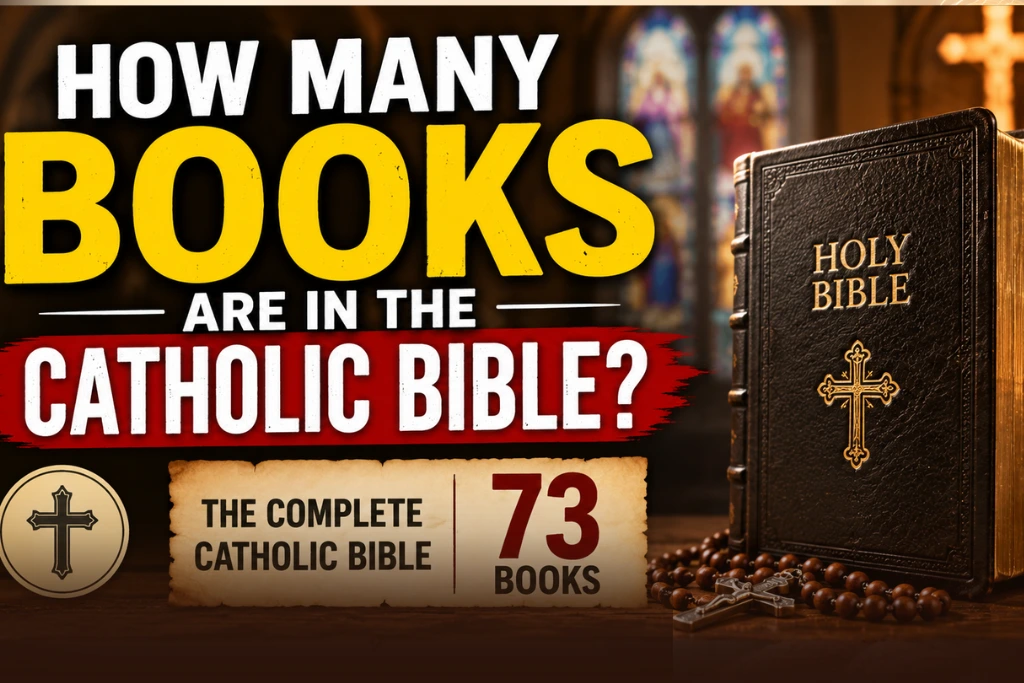

How Many Books Are in the Catholic Bible? A Complete Guide

How Many Books Are in the Catholic Bible

The Bible contains 66 books in the Protestant canon, 73 books in the Catholic canon, and 76 to 81 books in the Eastern Orthodox canon, depending on the specific church. All three traditions share the same 27 New Testament books. The differences come from a group of writings called the Deuterocanon — books that Catholics and Orthodox Christians read as Scripture and that Protestants, beginning with the Reformation, set apart or removed.

How Many Books Are in the Catholic Bible

This guide walks through every book in the Catholic Bible in order, explains what each one is for, and then traces the history: how the canon was formed, what Jerome did in the fourth century, what Luther did in the sixteenth, and why the Council of Trent drew a line in response.

Overview

The Catholic Old Testament has 46 books, divided into the Law, Historical Books, Wisdom and Poetry, and the Prophets. The New Testament has 27 books, divided into the Gospels, Acts, the Letters of Paul, the General Letters, and Revelation. Together they form the 73-book Catholic Bible.

The Catholic Old Testament includes seven Deuterocanonical books — Tobit, Judith, Wisdom, Sirach, Baruch, 1 Maccabees, and 2 Maccabees — plus additional sections of Esther and Daniel. These books were part of the Greek Septuagint used by the early Church and were formally confirmed as Scripture at the Council of Trent in 1546.

The New Testament is identical across all major Christian traditions. Every difference is in the Old Testament.

How Many Books Are in the Bible?

The number depends on which Christian tradition you ask.

TraditionOld TestamentNew TestamentTotal
Protestant Bible392766
Catholic Bible462773
Eastern Orthodox Bible49+2776–81
Ethiopian Orthodox TewahedoVaries (broad canon)2781+

Every Christian tradition agrees on the 27 books of the New Testament. Every tradition also agrees on the 39 Old Testament books found in Protestant Bibles. The disagreement is about additional Old Testament books — writings produced mostly between about 300 BC and 100 AD — that were included in the Greek Septuagint and in early Christian Bibles but were not part of the Hebrew Bible that took final shape in Jewish tradition.

We will walk through the books of the Catholic Bible first, then address the Deuterocanon, then explain the history behind the split.

The Old Testament: 46 Books in the Catholic Canon

The Old Testament tells the story of God’s covenant with Israel. In Catholic Bibles, it is arranged in four sections: the Law, the Historical Books, the Wisdom and Poetry books, and the Prophets. The Catholic arrangement follows the Greek Septuagint, which is why the Deuterocanonical books appear integrated into their natural sections rather than separated out.

The Law (Pentateuch) — 5 Books

These are the first five books, attributed to Moses and called the Torah in Jewish tradition. They tell the story of creation, the call of Abraham, the exodus from Egypt, and the giving of the Law at Sinai.

Genesis — Creation, the Fall, the Flood, and the stories of Abraham, Isaac, Jacob, and Joseph.

Exodus — Israel’s deliverance from Egypt and the covenant at Mount Sinai.

Leviticus — Sacrificial system, priesthood, and holiness laws.

Numbers — Israel’s forty years of wilderness wandering.

Deuteronomy — Moses’s farewell sermons before Israel enters the Promised Land.

Historical Books — 16 Book

These books trace Israel from the conquest of Canaan through the monarchy, the exile in Babylon, and the return to the land. In the Catholic canon, this section includes the Deuterocanonical books of Tobit, Judith, and 1 and 2 Maccabees, plus the Greek additions to Esther.

Joshua — The conquest and division of the Promised Land.

Judges — A cycle of rebellion, oppression, and rescue before Israel had a king.

Ruth — A Moabite widow enters the line of David.

1 Samuel — Samuel, Saul, and the rise of David.

2 Samuel — David’s reign over a united Israel.

1 Kings — Solomon, the temple, and the divided kingdom.

2 Kings — The decline of Israel and Judah, ending in exile.

1 Chronicles — David’s reign retold with a priestly and temple focus.

2 Chronicles — Solomon through the exile, written to re-center a returned community.

Ezra — Return from Babylon and rebuilding of the temple.

Nehemiah — Rebuilding the walls of Jerusalem and renewing the covenant.

Tobit — A family narrative with angels, blindness healed, and faithful prayer. (Deuterocanonical)

Judith — A widow saves her city by killing an Assyrian general. (Deuterocanonical)

Esther — A Jewish queen rescues her people in Persia. (Includes Greek additions not found in the Hebrew text)

1 Maccabees — The Jewish revolt against Greek rule in the second century BC. (Deuterocanonical)

2 Maccabees — Parallel material with more theological reflection on resurrection and martyrdom. (Deuterocanonical)

Wisdom and Poetry — 7 Books

These books address suffering, prayer, wisdom for daily life, the limits of human effort, and love. The Catholic canon includes two Deuterocanonical books in this section: Wisdom and Sirach.

Job — A righteous man’s suffering and God’s answer from the whirlwind.

Psalms — 150 songs and prayers covering every human emotion.

Proverbs — Practical wisdom for living well under God.

Ecclesiastes — A sustained meditation on meaning “under the sun.”

Song of Songs — Hebrew love poetry, read devotionally as a picture of covenant love.

Wisdom of Solomon — A Greek-influenced reflection on wisdom and the hope of immortality. (Deuterocanonical)

Sirach (also called Ecclesiasticus) — A long book of practical wisdom for daily life, family, friendship, and godliness. (Deuterocanonical)

The Major Prophets — 6 Books

“Major” refers to length, not importance. These are the long prophetic books. The Catholic canon includes Baruch among the Major Prophets and includes additional passages in Daniel.

Isaiah — Judgment and hope, with the clearest Old Testament portraits of the Messiah.

Jeremiah — The “weeping prophet” warning Judah before the Babylonian exile.

Lamentations — Five poems mourning the fall of Jerusalem.

Baruch — Attributed to Jeremiah’s scribe; prayers of repentance and hope for exiles. (Deuterocanonical)

Ezekiel — Visions and symbolic acts delivered to exiles in Babylon.

Daniel — Faithfulness under pagan empires, plus apocalyptic visions. (Includes the Prayer of Azariah, Susanna, and Bel and the Dragon)

The Minor Prophets — 12 Books

“Minor” simply means shorter. In the Hebrew Bible, these twelve are counted as one scroll, “The Twelve.”

Hosea — A prophet’s marriage mirrors Israel’s unfaithfulness and God’s mercy.

Joel — A locust plague becomes a call to return to the Lord.

Amos — Judgment on social injustice and empty religion.

Obadiah — The shortest Old Testament book; judgment on Edom.

Jonah — A reluctant prophet and a repenting city.

Micah — Judgment and the promise of a ruler from Bethlehem.

Nahum — The fall of Nineveh.

Habakkuk — A prophet wrestles with God about evil and learns to live by faith.

Zephaniah — The Day of the Lord and hope beyond judgment.

Haggai — A call to rebuild the temple after the exile.

Zechariah — Visions pointing to the coming Messiah.

Malachi — The last Old Testament prophet, closing with a promise of Elijah’s return.

The New Testament: 27 Books

The New Testament tells the story of Jesus and the birth of the Church. Every major Christian tradition — Protestant, Catholic, Orthodox — accepts the same 27 books in the same order.

The Four Gospels

Four accounts of the life, death, and resurrection of Jesus.

Matthew — Written for a Jewish audience; shows Jesus as the fulfillment of Old Testament prophecy.

Mark — The shortest and fastest-paced Gospel, likely the earliest written.

Luke — A careful historical account by a physician; emphasizes outsiders, women, and the Holy Spirit.

John — A theological Gospel framed around signs and “I am” statements.

Acts of the Apostles

Acts — Luke’s second volume. The Holy Spirit launches the Church in Jerusalem and carries the gospel to Rome.

The Letters of Paul — 14 Letters

Paul wrote to churches and to individuals between roughly 48 and 67 AD. These letters work out what the gospel means for belief and for daily life. Hebrews is traditionally grouped with Paul’s letters in Catholic Bibles, though its author is unnamed.

Romans — The most systematic explanation of the gospel in the Bible.

1 Corinthians — Pastoral correction for a messy, gifted church.

2 Corinthians — A defense of Paul’s ministry and a theology of weakness.

Galatians — Justification by faith, not by works of the Law.

Ephesians — The Church as the body of Christ and the unity of believers.

Philippians — Joy in Christ, written from prison.

Colossians — The supremacy of Christ over every rival power.

1 Thessalonians — Encouragement and the return of Christ.

2 Thessalonians — Correction about the Day of the Lord.

1 Timothy — Pastoral instructions for church leadership.

2 Timothy — Paul’s final letter; a charge to a younger pastor.

Titus — Appointing elders and teaching sound doctrine in Crete.

Philemon — A personal appeal for a runaway slave turned brother in Christ.

Hebrews — Christ as the greater high priest who fulfills the old covenant. (Author unnamed; traditionally listed with Pauline letters in Catholic Bibles)

The General Letters — 7 Letters

Called “General” or “Catholic” (meaning universal) because most were written to broader audiences rather than single congregations.

James — Practical faith that shows itself in action.

1 Peter — Hope and holiness in the face of suffering.

2 Peter — A warning against false teachers.

1 John — Assurance of salvation and the command to love.

2 John — A short warning against deceivers.

3 John — A short commendation and a rebuke of a controlling leader.

Jude — A sharp call to contend for the faith.

The Apocalypse

Revelation — John’s visions of Christ’s victory, the judgment of evil, and the new creation.

The Deuterocanonical Books: Why Catholic Bibles Have More

The Deuterocanonical books — often called the Apocrypha in Protestant contexts — are Jewish writings composed mostly between about 300 BC and 100 AD. They were included in the Septuagint, the Greek translation of the Hebrew Scriptures used by Greek-speaking Jews and by the earliest Christians.

The Catholic Bible includes these seven books plus additions:

Tobit — A family narrative with angels, blindness healed, and faithful prayer.

Judith — A widow saves her city by killing an Assyrian general.

Wisdom of Solomon — A Greek-influenced reflection on wisdom and immortality.

Sirach (also called Ecclesiasticus) — A long book of practical wisdom.

Baruch — Attributed to Jeremiah’s scribe; includes the Letter of Jeremiah.

1 Maccabees — The Jewish revolt against Greek rule in the second century BC.

2 Maccabees — Parallel material with more theological reflection on resurrection.

Additions to Esther — Prayers and letters not in the Hebrew text.

Additions to Daniel — The Prayer of Azariah, Susanna, and Bel and the Dragon.

Eastern Orthodox Bibles add more, with some variation between churches:

1 Esdras (sometimes called 3 Esdras in Latin)

Prayer of Manasseh

Psalm 151

3 Maccabees

4 Maccabees (usually as an appendix in Greek Orthodox Bibles)

The Ethiopian Orthodox Tewahedo Church has the broadest canon, adding books such as 1 Enoch, Jubilees, and 1–3 Meqabyan.

Protestants do not treat these books as Scripture, but many early Protestant Bibles — including the 1611 King James Version — still printed them in a separate section between the Testaments, labeled “Apocrypha” and recommended for reading but not for establishing doctrine.

How the Bible Canon Was Formed

The word canon comes from a Greek word for a measuring reed. A canonical book is one the Church recognized as the rule of faith, not simply an ancient book about religion. The canon was recognized over time, not handed down as a list from the start.

The Hebrew Canon (roughly 400 BC to 100 AD)

The Jewish Scriptures took shape in three sections, still reflected in the modern Hebrew Bible (the Tanakh):

Torah (Law) — the five books of Moses, recognized as authoritative by around the time of Ezra.

Nevi’im (Prophets) — the historical and prophetic books, largely settled by the second century BC.

Ketuvim (Writings) — Psalms, Proverbs, Job, and the rest, settled last.

By the time of Jesus, the Torah and Prophets were firmly fixed. The Writings were still being discussed at the edges. Jesus himself refers to “the Law, the Prophets, and the Psalms” (Luke 24:44), a phrase that matches this three-part structure.

Traditionally, the Jewish canon was said to have been closed at the so-called Council of Jamnia around 90 AD. More recent scholarship views that as a gradual consensus rather than a single decision, but the endpoint is the same: a 24-book Hebrew canon — identical in content to the 39-book Protestant Old Testament, just grouped differently.

The Septuagint and the Early Church

Greek-speaking Jews in Alexandria began translating the Hebrew Scriptures into Greek around the third century BC. That translation, called the Septuagint (abbreviated LXX), also included later Jewish writings like Tobit, Judith, Wisdom, and the Maccabees.

The New Testament writers largely quote from the Septuagint. When the Greek-speaking early Church read “the Scriptures,” it usually meant the Septuagint — so the Deuterocanonical books circulated alongside the Hebrew books from the beginning of Christian history.

Jerome, the Vulgate, and the “Apocrypha” Label (late 4th century)

In the late 300s, Jerome translated the Bible into Latin. His Vulgate became the standard Bible of the Western Church for more than a thousand years.

Jerome did something important: he distinguished between books that existed in Hebrew (what he called the Hebraica veritas, the “Hebrew truth”) and the additional books found only in Greek. He used the label apocrypha for this second group, arguing they were useful for the Church but not on the same level as the Hebrew Scriptures for settling doctrine.

Jerome’s mentor Augustine disagreed and argued for accepting the broader Greek canon. Regional councils in North Africa — Hippo in 393 and Carthage in 397 and 419 — endorsed the broader list. In practice, the Western Church used both sets of books together for the next thousand years, even while Jerome’s reservations stayed on record.

The Medieval Consensus (roughly 500 to 1500 AD)

Through the Middle Ages, the Vulgate was the Bible in the West. The Deuterocanonical books were bound in the same volumes as Genesis and Isaiah, read in worship, and cited by theologians. But Jerome’s distinction never fully disappeared. Medieval writers sometimes flagged these books as “ecclesiastical” rather than “canonical in the strict sense,” even while quoting them freely.

When the printing press arrived in the 1450s, it locked in the Vulgate order and content as the Western norm — right as the Reformation was about to challenge it.

What the Reformation Changed

The Reformation did not invent the idea that the Deuterocanonical books stood on different ground than the Hebrew Scriptures. Jerome had said that more than a thousand years earlier. What the Reformers did was act on that distinction in a way the medieval Church had not.

Luther’s Reordering of the Old Testament

Martin Luther translated the Bible into German — New Testament in 1522, complete Bible in 1534. When he reached the Deuterocanonical books, he did not erase them. He moved them into a separate section between the Old and New Testaments, labeled “Apocrypha: These Books Are Not Held Equal to the Scriptures, but Are Useful and Good to Read.”

That placement captured the Protestant verdict in a single line. The books were worth reading. They were not worth building doctrine on.

Luther’s reasoning was rooted in a principle he called sola Scriptura — Scripture alone as the final authority for faith and practice. If a writing was going to ground doctrine, it needed to be unambiguously part of the canon the Church received from Israel. The Hebrew canon — 39 books — was the canon the Jewish people kept, the canon Jesus used, and the canon Jerome had flagged. Luther accepted it.

Luther’s Handling of the New Testament

Luther also had opinions about the New Testament. He thought Hebrews, James, Jude, and Revelation stood on weaker historical ground than the other 23 books. In his German Bible, he placed them at the end of the New Testament, unnumbered in his table of contents, and famously called James an “epistle of straw” in his 1522 preface — though he softened that line in later editions.

He did not remove any of these books. They are in every Lutheran Bible and every Protestant Bible today. Luther’s reordering was a private judgment that did not become a Protestant standard. The Church kept all 27 New Testament books.

The Council of Trent’s Response (1546)

The Roman Catholic Church answered the Reformation at the Council of Trent, which opened in 1545. In its fourth session, on April 8, 1546, the council defined the Catholic canon as a matter of binding doctrine for the first time.

Trent declared that the books of the Old Testament — including Tobit, Judith, Wisdom, Sirach, Baruch, 1 and 2 Maccabees, and the longer versions of Esther and Daniel — were to be received “with equal devotion and reverence” as the others. Anyone who rejected them was declared anathema.

This was not a new canon. It was a formal confirmation of the Vulgate canon that had been in use since Jerome and Augustine. But Trent closed a door that had been quietly open for over a millennium. Where medieval writers could distinguish between “canonical” and “ecclesiastical” books, Trent said the Catholic Church recognized one canon, full stop.

The Protestant Settlement: Articles, Confessions, and the King James Bible

Other Reformation churches followed Luther’s general approach with their own formulations:

The Thirty-Nine Articles (1563, Church of England) — listed the 39 books Protestants receive as Old Testament and said the Apocryphal books were read “for example of life and instruction of manners” but not used to establish doctrine.

The Belgic Confession (1561, Reformed) — drew the same line.

The Westminster Confession of Faith (1647, Presbyterian) — made it most explicit: “The books commonly called Apocrypha, not being of divine inspiration, are no part of the canon of the Scripture, and therefore are of no authority in the Church of God.”

The King James Version of 1611 — originally included the Apocrypha between the Testaments, following the Lutheran pattern. The British and Foreign Bible Society decided in 1826 to stop printing Bibles with the Apocrypha, and most Protestant Bibles have been 66 books only ever since.

The Orthodox Position

The Eastern Orthodox churches were not directly involved in the Reformation debates and kept their received canon — a slightly broader list than the Catholic one, still rooted in the Septuagint. Orthodox churches sometimes call the Deuterocanonical books anagignoskomena, meaning “worth reading,” and distinguish them lightly from the “primary” canon without treating them as a separate category the way Protestants do.

A Side-by-Side View of the Three Canons

SectionProtestantCatholicEastern Orthodox
Old Testament394649+
New Testament272727
Total667376–81

The New Testament is the same in every column. Every difference is in the Old Testament.

How to Start Reading the Books of the Bible

Knowing how many books exist is not the same as knowing how to read them. A few practical notes:

Do not start at Genesis and push straight through. Most people stall in Leviticus. Start with the Gospel of John, then Mark, Genesis, Exodus, Acts, and a Pauline letter like Romans or Ephesians.

Use a readable translation. Good Catholic options include the New American Bible, Revised Edition (NABRE), the Revised Standard Version Catholic Edition (RSV-CE), and the New Revised Standard Version Catholic Edition (NRSV-CE).

Read a whole book, not just verses. Most books of the Bible are shorter than a paperback chapter. You can read Philippians in twenty minutes and Ruth in thirty.

Keep a map of the canon in your head. Knowing that you are in the Prophets, or in a Pauline letter, or in a Gospel, changes how you read what is in front of you.

To read all previous daily verses, visit JesusVerseOfTheDay.com.

FAQs About How Many Books Are in the Catholic Bible?

Why do Catholic Bibles have more books than Protestant Bibles?

Catholic Bibles include seven Deuterocanonical books — Tobit, Judith, Wisdom, Sirach, Baruch, 1 Maccabees, and 2 Maccabees — plus longer versions of Esther and Daniel. These books were part of the Greek Septuagint used by the early Church and were included in Jerome’s Latin Vulgate. Protestants, beginning with Luther, returned to the Hebrew canon for the Old Testament. The Council of Trent in 1546 formally defined the Catholic canon in response.

Is the Apocrypha the same thing as the Deuterocanon?

Yes, mostly. They are two different labels for the same group of books. Apocrypha is the Protestant term and comes from Jerome. Deuterocanonical (“second canon”) is the Catholic term, first used in the sixteenth century by Catholic scholar Sixtus of Siena. Some Protestants also use “Apocrypha” more broadly to include Orthodox-only books and certain later writings that no major church accepts as Scripture.

Did Martin Luther remove books from the Bible?

No. Luther did not remove any books. He moved the Deuterocanonical books into a separate section between the Testaments, labeled them helpful but not Scripture, and kept all 27 New Testament books. His private opinions about Hebrews, James, Jude, and Revelation never became a Protestant standard. Every Lutheran and Protestant Bible today includes the full 27-book New Testament.

What order were the books of the Bible written in?

The order of books in the Bible is not the order they were written. Job may be one of the oldest texts. Moses’s Pentateuch was compiled in the 1400s to 1200s BC. Most prophetic books date from the 800s to the 400s BC. In the New Testament, James and Galatians were likely first (around 48–49 AD), followed by the other Pauline letters, then Mark (around 65–70 AD), the other Gospels, and Revelation last (around 95 AD). The earliest New Testament book is not Matthew, and the last is not 3 John.

How did the New Testament get its 27 books?

Early Christians were reading and copying the apostolic writings from the first century onward. By the second century, the four Gospels and Paul’s letters were already treated as Scripture across the Church. The first list matching the 27 books exactly is in a festal letter from Athanasius of Alexandria in 367 AD. The councils of Hippo (393) and Carthage (397) confirmed the same list. No major Christian tradition has disputed those 27 books since.

Does the Bible’s order in Jewish and Christian tradition differ?

Yes. Jewish Bibles group the same 39 books into three sections — Torah, Prophets, Writings — and end with 2 Chronicles. Christian Bibles regroup them into Law, History, Wisdom, and Prophets, and end with Malachi. The content is identical. Ending on Malachi, with its promise of Elijah’s return, creates a smoother literary bridge into the New Testament’s opening with John the Baptist.

What are the shortest and longest books in the Bible?

The shortest Old Testament book is Obadiah (one chapter, 21 verses). In the New Testament, 2 John is the shortest by verse count (13 verses), while 3 John is the shortest book in the entire Bible by word count. The longest book by chapter count is Psalms (150 chapters); the longest prose book is Jeremiah. Psalm 119 alone is longer than many whole books.

Which Catholic Bible translation should I use?

Good Catholic translations include the New American Bible, Revised Edition (NABRE), the Revised Standard Version Catholic Edition (RSV-CE), and the New Revised Standard Version Catholic Edition (NRSV-CE). These contain all 73 books with Church approval and are widely used in study and liturgy.

Where should I start reading the Catholic Bible?

Start with the Gospel of Luke, then read Acts. After that, the Psalms offer daily comfort and prayer. From there, explore Genesis and Exodus for the foundation, and Romans for deep theology. Don’t rush — the Bible is meant to be savored, not sprinted through.

Final Thought

When someone asks, “How many books are in the Catholic Bible?” the answer is straightforward: 73. But behind that number is a rich story of how the early Church read the Scriptures, how traditions developed, and how the Church eventually defined its canon with clarity.

If you’ve never read the Deuterocanonical books, they are worth exploring. Start with the book of Wisdom or Sirach, and you may find words that feel as if they were written for your exact situation. The Catholic Bible is not longer by accident — it carries the fullness of the Old Testament tradition that the early Church knew and loved.

So the next time you see a Catholic Bible with extra pages, you’ll know exactly what’s in there. And maybe, like me, you’ll discover a new favorite verse hiding in a book you’d never heard of before.

Top 50 Favorite Bible Verses for Women (With Honest Explanations)

Favorite Bible Verses for Women

I’ve sat in enough women’s small groups, enough late-night coffee conversations, enough text threads where a friend asks, “Can you send me a verse?” to know that women often carry quiet weights they don’t always say out loud. We carry questions about our worth, our bodies, our singleness or marriage, our children, our aging parents, our work, our calling, our anxiety at 3 a.m.

The Bible speaks to all of it. But sometimes we need more than a verse reference — we need someone to sit with us and say, “Here’s what this means in plain words, and here’s why it might matter to you right now.” That’s what this list is.

These aren’t just popular verses. They’re the ones women return to again and again because they meet us in the middle of real life. Each one has an explanation that’s honest, not preachy. I’ve organized them by the situations we actually face. All verses are from the New International Version (NIV) unless noted.

A Note Before You Begin

Favorite Bible Verses for Women

You don’t need to read all fifty at once. Skim the headings, find the one that matches your season, and sit with a verse or two. Maybe write one down. Maybe pray it back to God in your own words. The goal isn’t to collect verses like badges — it’s to let God’s words become anchors in the middle of the storm.

For Identity and Self-Worth

These are for the days when you feel invisible, not enough, or uncertain about who you really are.

1. Proverbs 31:25

“She is clothed with strength and dignity; she can laugh at the days to come.” – Proverbs 31:25
This isn’t about having a perfect life with no problems. It’s about a woman whose trust in God is so steady that the future doesn’t terrify her. Strength and dignity aren’t something she puts on like a costume — they grow out of a long walk with God. And the laughter? It’s not denial. It’s freedom.

2. Psalm 139:14

“I praise you because I am fearfully and wonderfully made; your works are wonderful, I know that full well.” – Psalm 139:14
You may not always feel wonderful. But the psalmist doesn’t say “I feel wonderful.” He says God’s works are wonderful — and you are one of them. That’s a fact, not a feeling. It stands even on days when your mirror or your inner critic says otherwise.

3. Ephesians 2:10

“For we are God’s handiwork, created in Christ Jesus to do good works, which God prepared in advance for us to do.” – Ephesians 2:10
You are not an accident. You are not a mistake. You are not a fill-in-the-blank. God made you with intention, and He has specific things for you to do — not to earn His love, but to walk in the purpose He already designed for you.

4. 1 Peter 2:9

“But you are a chosen people, a royal priesthood, a holy nation, God’s special possession, that you may declare the praises of him who called you out of darkness into his wonderful light.” -1 Peter 2:9
Chosen. Royal. Special possession. Those words may feel too big for a woman who just folded laundry or finished a long shift. But they’re true regardless of what you did today. Your identity is rooted in whose you are, not what you accomplish.

5. Song of Songs 4:7

“You are altogether beautiful, my darling; there is no flaw in you.” – Song of Songs 4:7
Whether you read this as a love poem between a bride and groom or as a picture of God’s love for His people, the message lands: you are seen, desired, and loved without condition. Not because you’re flawless, but because love covers flaws.

6. Isaiah 43:4

“Since you are precious and honored in my sight, and because I love you…” – Isaiah 43:4
God says this to His people when they’re in exile, feeling forgotten. If you’ve ever felt like you don’t matter, this verse is a direct counter-argument. Precious. Honored. Loved. Not because of your performance — because of His character.

7. Zephaniah 3:17

“The Lord your God is with you, the Mighty Warrior who saves. He will take great delight in you; in his quiet love he will rejoice over you with singing.” – Zephaniah 3:17
Picture that: God singing over you. Not a distant, disappointed deity, but a Father who delights in you so much He breaks into song. That’s not sentimental fluff — it’s a declaration of how deeply you are loved.

8. Romans 8:37-39

“No, in all these things we are more than conquerors through him who loved us. For I am convinced that neither death nor life, neither angels nor demons, neither the present nor the future, nor any powers, neither height nor depth, nor anything else in all creation, will be able to separate us from the love of God that is in Christ Jesus our Lord.” – Romans 8:37-39
Nothing can pry you out of God’s hands. Not your failures. Not your depression. Not the opinion of others. Not even your own doubts. This is the strongest love promise in Scripture — read it slowly and let it sink in.

9. Psalm 45:11

“Let the king be enthralled by your beauty; honor him, for he is your lord.” – Psalm 45:11
Historically, this was written for a royal wedding. But spiritually, it reminds us that the King of kings is captivated by His people. You are not tolerated — you are treasured.

10. 2 Corinthians 5:17

“Therefore, if anyone is in Christ, the new creation has come: The old has gone, the new is here!” – 2 Corinthians 5:17
Your past does not define you. Your mistakes do not get the final word. In Christ, you are genuinely new. That’s not positive thinking; that’s a spiritual reality. The woman you were is not the woman you are becoming in Him.

For Anxiety, Worry, and Overwhelm

These verses are for the nights your mind races and the days you feel buried under the load.

11. Philippians 4:6-7

“Do not be anxious about anything, but in every situation, by prayer and petition, with thanksgiving, present your requests to God. And the peace of God, which transcends all understanding, will guard your hearts and your minds in Christ Jesus.” – Philippians 4:6-7
This is not a command to “just stop worrying.” It’s an invitation to trade your anxiety for prayer. The peace that follows isn’t logical — it doesn’t depend on circumstances changing. It’s a guard around your heart and mind that God Himself posts.

12. 1 Peter 5:7

“Cast all your anxiety on him because he cares for you.” – 1 Peter 5:7
All of it. Not just the spiritual-sounding worries. The mortgage, the diagnosis, the strained relationship, the fear about your kids. He cares — actively, personally. Casting is a deliberate act: you open your hands and let Him carry what was never yours to hold alone.

13. Isaiah 26:3

“You will keep in perfect peace those whose minds are steadfast, because they trust in you.” – Isaiah 26:3
Perfect peace sounds impossible, but the Hebrew phrase is “shalom shalom” — a doubled peace, a complete wholeness. It comes not from controlling your thoughts by willpower, but from fixing your mind on God’s trustworthiness.

14. Matthew 11:28-30

“Come to me, all you who are weary and burdened, and I will give you rest. Take my yoke upon you and learn from me, for I am gentle and humble in heart, and you will find rest for your souls. For my yoke is easy and my burden is light.” – Matthew 11:28-30
Jesus doesn’t scold you for being tired. He invites you to exchange your heavy load for His light one. A yoke is shared — you’re not pulling alone anymore.

15. Psalm 46:10

“He says, ‘Be still, and know that I am God…’” – Psalm 46:10
Stillness is a discipline, not a luxury. In a world that constantly demands your attention, choosing to be still and remember who God is can be the most countercultural, sanity-saving act you do all day.

16. John 14:27

“Peace I leave with you; my peace I give you. I do not give to you as the world gives. Do not let your hearts be troubled and do not be afraid.” – 16. John 14:27
The world offers peace through circumstances: get enough money, enough security, enough control. Jesus gives peace that exists even when circumstances are falling apart. That’s the difference.

17. Psalm 34:4

“I sought the Lord, and he answered me; he delivered me from all my fears.” – Psalm 34:4
Notice the order: seek, then deliverance. The psalmist didn’t wait until fear left to seek God. He sought God in the fear, and God met him there. Fear doesn’t have to be gone before you turn toward Him.

18. Isaiah 41:10

“So do not fear, for I am with you; do not be dismayed, for I am your God. I will strengthen you and help you; I will uphold you with my righteous right hand.” – Isaiah 41:10
The command not to fear is anchored in a promise: I am with you. God doesn’t tell you to white-knuckle your way through fear. He says, I’m here, and I’m holding you up. That changes everything.

19. 2 Timothy 1:7

“For the Spirit God gave us does not make us timid, but gives us power, love and self-discipline.” – 2 Timothy 1:7
Fear is not from God. What He gives is power for the moment, love for others and yourself, and a sound mind (some translations say “self-discipline”). If you’re feeling paralyzed, this verse is a reminder of what’s already inside you.

20. Psalm 94:19

“When anxiety was great within me, your consolation brought me joy.” – Psalm 94:19
This verse doesn’t pretend anxiety isn’t real. It acknowledges that anxiety can be “great.” But God’s comfort — His presence, His promises, His character — can bring joy even in the middle of it. That’s not fake happiness; it’s deep, stubborn hope.

For Strength When You Feel Weak

For the days when you’re running on empty and don’t know how you’ll make it through.

21. Isaiah 40:31

“But those who hope in the Lord will renew their strength. They will soar on wings like eagles; they will run and not grow weary, they will walk and not be faint.” – Isaiah 40:31
Soaring, running, walking — sometimes strength looks like a dramatic comeback, but most days it just looks like putting one foot in front of the other. The promise is renewal for all of it, as long as your hope is in the Lord.

22. 2 Corinthians 12:9

“But he said to me, ‘My grace is sufficient for you, for my power is made perfect in weakness.’ Therefore I will boast all the more gladly about my weaknesses, so that Christ’s power may rest on me.” – 2 Corinthians 12:9
Paul prayed for his weakness to be removed, and God said no — but promised something better: grace. When you admit you can’t, God steps in with His “can.” Strength isn’t about being tough; it’s about being honest and letting Him fill the gap.

23. Philippians 4:13

“I can do all this through him who gives me strength.” – Philippians 4:13
This isn’t a magic formula for winning at everything. Paul wrote it from prison, facing hunger and need. The “all this” includes surviving the worst with Christ’s strength. Whatever you’re facing, you’re not facing it alone.

24. Joshua 1:9

“Have I not commanded you? Be strong and courageous. Do not be afraid; do not be discouraged, for the Lord your God will be with you wherever you go.” – Joshua 1:9
God commands courage, but He doesn’t expect you to manufacture it yourself. The reason you can be strong is because He is with you — everywhere, in every circumstance. His presence is the source.

25. Psalm 73:26

“My flesh and my heart may fail, but God is the strength of my heart and my portion forever.” – Psalm 73:26
There will be days when your body gives out and your emotions betray you. Even then, God remains your strength. He is your portion — your inheritance, your enough — when nothing else feels like enough.

26. Nehemiah 8:10

“Do not grieve, for the joy of the Lord is your strength.” – Nehemiah 8:10
This was spoken to people who had just heard God’s law read and realized how far they had fallen. They were weeping. The answer wasn’t “try harder,” but “receive God’s joy.” Joy in God’s character — His mercy, His faithfulness — becomes fuel when your own tank is empty.

27. Exodus 14:14

“The Lord will fight for you; you need only to be still.” – Exodus 14:14
Some battles are not yours to win. That’s not passivity — it’s strategic surrender. When you’ve done all you can, and it’s not enough, this verse gives you permission to stop striving and let God take over.

28. Habakkuk 3:19

“The Sovereign Lord is my strength; he makes my feet like the feet of a deer, he enables me to tread on the heights.” – Habakkuk 3:19
Deer are sure-footed on rocky, dangerous terrain. When your path feels treacherous, God gives you the ability to walk it without slipping. You won’t just survive the heights — you’ll move through them with confidence.

29. Psalm 18:32

“It is God who arms me with strength and keeps my way secure.” – Psalm 18:32
Strength and security are both gifts. You don’t have to armor up on your own. God equips you and guards your path. That’s a double promise for a woman who feels exposed.

30. Colossians 1:11

“Being strengthened with all power according to his glorious might so that you may have great endurance and patience…” – Colossians 1:11
This verse doesn’t ask for a burst of energy that flames out. It asks for endurance and patience — the long-game strength. And that strength comes from God’s glorious might, not your own grit.

For Marriage, Relationships, and Family

These verses speak to the unique joys and struggles of loving others well.

31. Proverbs 31:10

“A wife of noble character who can find? She is worth far more than rubies.” – Proverbs 31:10
Noble character is rare and precious — more valuable than anything money can buy. If you’re a wife, this isn’t pressure to be perfect. It’s a reminder that your steady faithfulness is of immense worth.

32. Proverbs 12:4

“A wife of noble character is her husband’s crown, but a disgraceful wife is like decay in his bones.” – Proverbs 12:4
A crown is a symbol of honor. A woman of character brings honor and dignity to her marriage. It’s a picture of how a woman’s inner strength can build up her home.

33. Ephesians 4:2-3

“Be completely humble and gentle; be patient, bearing with one another in love. Make every effort to keep the unity of the Spirit through the bond of peace.” – Ephesians 4:2-3
These words apply to every relationship, but especially close ones. Humility, gentleness, patience — these aren’t weak traits. They take enormous strength, and they’re the building blocks of real unity.

34. 1 Corinthians 13:4-7

“Love is patient, love is kind. It does not envy, it does not boast, it is not proud. It does not dishonor others, it is not self-seeking, it is not easily angered, it keeps no record of wrongs…” – 1 Corinthians 13:4-7
This is the love chapter, often read at weddings. But it’s not just romantic — it’s a description of God’s love toward us, and a blueprint for how we love others. Read it slowly, replacing “love” with your own name. Where do you need to grow?

35. Philippians 2:3-4

“Do nothing out of selfish ambition or vain conceit. Rather, in humility value others above yourselves, not looking to your own interests but each of you to the interests of the others.” – Philippians 2:3-4
This verse cuts against the grain of self-focus. But it’s the secret to healthy relationships: when both people are looking out for the other, everyone is cared for. It’s not about becoming a doormat — it’s about mutual honor.

36. Proverbs 31:26

“She speaks with wisdom, and faithful instruction is on her tongue.” – Proverbs 31:26
Your words have power. This verse describes a woman whose speech is a gift to her family and friends — wise, faithful, instructive. Imagine being the woman people come to because they know your words will help, not hurt.

37. Titus 2:3-5

“Likewise, teach the older women to be reverent in the way they live, not to be slanderers or addicted to much wine, but to teach what is good. Then they can urge the younger women to love their husbands and children, to be self-controlled and pure, to be busy at home, to be kind, and to be subject to their husbands, so that no one will malign the word of God.” – Titus 2:3-5
This passage often gets reduced to a checklist. But the heart of it is mentoring — older women investing in younger women. It’s not about legalism; it’s about passing on wisdom and modeling a life of faith across generations.

38. Romans 12:10

“Be devoted to one another in love. Honor one another above yourselves.” – Romans 12:10
Devotion and honor. Two words that can transform a marriage or friendship. What if you made a habit of asking, “How can I honor this person today?”

39. 1 Peter 4:8

“Above all, love each other deeply, because love covers over a multitude of sins.” – 1 Peter 4:8
Deep love isn’t surprised by imperfection; it absorbs it. That doesn’t mean ignoring abuse or staying in harm’s way — it means that in ordinary relationships, love chooses grace over grudges.

40. Genesis 2:18

“The Lord God said, ‘It is not good for the man to be alone. I will make a helper suitable for him.’” – Genesis 2:18
The word “helper” here doesn’t mean an assistant. It’s the same word used of God when He helps His people. A wife is a strong ally, a partner, not a subordinate. This verse elevates the role of women as essential, not optional.

For Seasons of Waiting and Uncertainty

For the in-between times when you can’t see what God is doing.

41. Jeremiah 29:11

“For I know the plans I have for you,” declares the Lord, “plans to prosper you and not to harm you, plans to give you hope and a future.” – Jeremiah 29:11
This was written to exiles who wouldn’t see the fulfillment for decades. It’s not a promise of instant happiness, but of God’s long-term faithfulness. When you can’t see the plan, you can trust the Planner.

42. Psalm 27:14

“Wait for the Lord; be strong and take heart and wait for the Lord.” – Psalm 27:14
Waiting is active, not passive. It requires strength and courage. This verse doesn’t say “wait with a smile” — it says “be strong and take heart” while you wait. That’s a realistic command for real life.

43. Isaiah 40:31

Yes, this one appears again, because it’s so central for waiting seasons. Those who hope in the Lord don’t just survive the wait — they are renewed in it. The waiting becomes a place of strength-building, not just endurance.

44. Lamentations 3:22-23

“Because of the Lord’s great love we are not consumed, for his compassions never fail. They are new every morning; great is your faithfulness.” – Lamentations 3:22-23
Written after Jerusalem was destroyed, in the middle of grief. The writer can still say: God’s mercies are new every morning. For a woman in a dark season, this is the daily promise you need. Just get through today — tomorrow’s mercy will be there.

45. Psalm 46:5

“God is within her, she will not fall; God will help her at break of day.” – Psalm 46:5
“Within her” — that’s a powerful image. God isn’t just near; He’s inside. And the help comes “at break of day” — not necessarily before, but at the exact right time. Hold on through the night.

46. Proverbs 3:5-6

“Trust in the Lord with all your heart and lean not on your own understanding; in all your ways submit to him, and he will make your paths straight.” – Proverbs 3:5-6
You don’t need to know the whole road. You just need to know the One leading. This verse invites you to stop over-analyzing and start trusting. Straight paths don’t mean easy; they mean directed.

47. Habakkuk 2:3

“For the revelation awaits an appointed time; it speaks of the end and will not prove false. Though it linger, wait for it; it will certainly come and will not delay.” – Habakkuk 2:3
Some promises take longer than we want. This verse acknowledges the lingering — but insists that what God has spoken will happen. The delay is not denial.

48. Psalm 130:5-6

“I wait for the Lord, my whole being waits, and in his word I put my hope. I wait for the Lord more than watchmen wait for the morning.” – Psalm 130:5-6
The watchman knows the morning will come. It always does. That’s the kind of confidence the psalmist has — not wishful thinking, but a certainty that God will show up. In your waiting, that’s the posture to adopt.

49. Isaiah 30:18

“Yet the Lord longs to be gracious to you; therefore he will rise up to show you compassion. For the Lord is a God of justice. Blessed are all who wait for him!” – Isaiah 30:18
God isn’t reluctant to help. He longs to be gracious. Waiting isn’t about convincing a stingy God — it’s about aligning your heart with a generous one. Blessed are those who wait for Him.

50. Romans 8:28

“And we know that in all things God works for the good of those who love him, who have been called according to his purpose.” – Romans 8:28
All things. Not all things are good, but God can weave even the broken, painful, confusing things into a larger good. This is the ultimate verse for uncertainty — you may not see the pattern now, but the Weaver does.

To read all previous daily verses, visit JesusVerseOfTheDay.com.

How to Make These Verses Yours

Reading fifty verses is one thing. Living them is another. Here are three simple practices that have helped me — and many women I know — actually hold onto Scripture.

Write One Verse on a Notecard Each Week
Pick the verse that hit you hardest. Write it out by hand. Put it where you’ll see it: the bathroom mirror, the car dashboard, the kitchen window. Let it become the background music of your week.

Pray the Verse Back in Your Own Words
Don’t just recite it. Turn it into a conversation. For example, if you’re holding onto Zephaniah 3:17, pray, “God, I don’t always feel delight-worthy, but You say You delight in me. Help me believe it today.” That’s where transformation starts.

Share One Verse with Another Woman
Text a friend who’s struggling. “I read this and thought of you.” You don’t need a long message — just one verse and one sentence. You never know how God might use it as a lifeline in her day.

FAQs About Favorite Bible Verses for Women

What makes a verse a “favorite” for women specifically?
It’s not that God’s Word is different for men and women. But certain themes — identity, worth, anxiety, strength in hidden service, waiting — often resonate deeply with women’s experiences. The verses women return to most are the ones that speak directly into those places.

Are these verses only for women?
No. Every verse applies to all believers. But I’ve framed the explanations through a woman’s lens because the specific struggles and seasons of womanhood are real and worth honoring. Men can certainly read and benefit from every single one.

How can I memorize these verses effectively?
Start small. Pick one short verse, like Psalm 46:10 or 1 Peter 5:7. Write it on a card, set an alarm on your phone to read it three times a day, and try saying it aloud from memory by the end of the week. Repetition is key, and speaking it out loud engages more of your brain.

What if I don’t “feel” encouraged when I read them?
Feelings aren’t the measure of truth. God’s Word is alive and active even when your emotions are flat. Many times, the seed of a verse is planted in the dark, and the fruit comes later. Keep reading, keep praying, and don’t judge the process by a single moment.

Can I use these verses to encourage my daughter or a younger woman?
Absolutely — that’s one of the best uses of this list. Pick one that fits her season, write it in a card, and add a sentence about why you thought of her. It doesn’t have to be long. Consistency and sincerity matter more than eloquence.

Where should I start if I’ve never read the Bible much?
Start with the Gospel of John — it’s clear, warm, and focused on who Jesus is. Then try the Psalms for prayers and emotions. For this list specifically, start with the section that matches your current need, not the whole fifty. One verse, slowly, is better than fifty skimmed.

Which verse is best for a woman who feels unseen?
I’d point to Genesis 16:13, where Hagar calls God “the God who sees me.” It’s not in this top 50, but it’s a powerful one. From this list, Zephaniah 3:17 (“He will take great delight in you”) is also a strong reminder that you are not forgotten.

How do I know if a verse is being taken out of context?
A good habit is to read the verses around it. If you’re using a study Bible or a free app like YouVersion, you can tap to see the chapter. Ask: Who was this written to? What was the situation? Then apply the timeless principle, not the specific circumstance. And when in doubt, ask a pastor or mature believer.

Can these verses help with depression or anxiety?
They can offer real comfort and truth, but they’re not a substitute for professional help. If you’re struggling with clinical depression or severe anxiety, please reach out to a counselor, doctor, or trusted pastor. Scripture is a lifeline, but God also works through medical and therapeutic care.

What’s the best way to study these verses more deeply?
Pick one verse and do a mini-study: write it out, circle key words, ask what it says about God, about you, and what action it invites. Use a concordance or study Bible to see cross-references. Spending a week on one verse will do more for your soul than reading fifty in one sitting.

A Final Word

The Bible is not a rulebook to beat yourself up with. It’s a love letter, a battle map, a comfort, a call. These fifty verses are not meant to make you feel behind or guilty. They’re meant to meet you where you are and lift your eyes.

So if you only remember one thing from this list, let it be this: God sees you. He knows the weight you carry. And His words are not empty — they are life.

50 Bible Verses About Faithful Women: Stories, Scriptures, and Strength for Today

Bible Verses About Faithful Women

When I think of faithful women in the Bible, my mind doesn’t first go to the famous ones. It goes to a sentence in Acts about a woman named Tabitha. The text says she was “always doing good and helping the poor.” That’s it. No sermon recorded. No miracle performed by her own hand — at least not before Peter arrived. But her life of quiet faithfulness had woven her so tightly into her community that when she died, the widows stood weeping, holding up the tunics she had made.

Bible Verses About Faithful Women

Faithfulness, I’ve come to believe, often looks like that. Not one grand moment, but a thousand small choices strung together over a lifetime.

This collection of bible verses about faithful women is meant to give you more than a list. It’s a walk through Scripture, noticing the women who stayed steady when it would have been easier to turn back. Some of them are named and famous. Some appear in a single verse. All of them point to a God who sees and honors faithfulness — even when no one else does.

How to Use These Bible Verses About Faithful Women

You don’t need to read all fifty in one sitting. Pick a category that matches where you are today. Sit with one verse for a few minutes. Maybe read it aloud. Maybe journal a response. The goal isn’t volume — it’s letting the words sink deep and shape something inside you.

Faithful Women in the Old Testament

These women walked with God in times when faith was often costly and visibility was minimal. Their names still echo.

Ruth: Loyalty That Costs Something

1. Ruth 1:16-17

“Where you go I will go, and where you stay I will stay. Your people will be my people and your God my God.”– Ruth 1:16-17

2. Ruth 2:12

“May the Lord repay you for what you have done. May you be richly rewarded by the Lord, the God of Israel, under whose wings you have come to take refuge.” – Ruth 2:12

3. Ruth 3:11

“All the people of my town know that you are a woman of noble character.” – Ruth 3:11

Esther: Courage Born from Prayer and Preparation

4. Esther 4:14

“And who knows but that you have come to your royal position for such a time as this?” – Esther 4:14

5. Esther 4:16

“Go, gather together all the Jews who are in Susa, and fast for me. … When this is done, I will go to the king, even though it is against the law. And if I perish, I perish.” – Esther 4:16

6. Esther 5:2

“When he saw Queen Esther standing in the court, he was pleased with her and held out to her the gold scepter.” – Esther 5:2

Hannah: Faithfulness Through Long Waiting

7. 1 Samuel 1:10-11

“In her deep anguish Hannah prayed to the Lord, weeping bitterly. And she made a vow…” – 1 Samuel 1:10-11

8. 1 Samuel 1:27-28

“I prayed for this child, and the Lord has granted me what I asked of him. So now I give him to the Lord.” – 1 Samuel 1:27-28

Sarah: Faith Despite Laughter

9. Genesis 21:1-2

“Now the Lord was gracious to Sarah as he had said … Sarah became pregnant and bore a son to Abraham in his old age.” – Genesis 21:1-2

10. Hebrews 11:11 (NIV)

“And by faith even Sarah, who was past childbearing age, was enabled to bear children because she considered him faithful who had made the promise.” – Hebrews 11:11 (NIV)

Miriam: Leading Women in Worship

11. Exodus 15:20-21

“Then Miriam the prophet, Aaron’s sister, took a timbrel in her hand, and all the women followed her, with timbrels and dancing.” – Exodus 15:20-21

Deborah: Faithful Leadership in a Chaotic Time

12. Judges 4:4-5

“Now Deborah, a prophet, the wife of Lappidoth, was leading Israel at that time. She held court under the Palm of Deborah … and the Israelites went up to her to have their disputes decided.” – Judges 4:4-5

Rahab: Faith That Crossed a Line

13. Joshua 2:11

“For the Lord your God is God in heaven above and on the earth below.” – Joshua 2:11

14. Hebrews 11:31

“By faith the prostitute Rahab, because she welcomed the spies, was not killed with those who were disobedient.” – Hebrews 11:31

The Widow of Zarephath: Faith in a Famine

15. 1 Kings 17:15-16

“She went away and did as Elijah had told her. So there was food every day for Elijah and for the woman and her family. For the jar of flour was not used up and the jug of oil did not run dry.” – 1 Kings 17:15-16

The Proverbs 31 Woman: A Portrait of Steady Faithfulness

16. Proverbs 31:25

“She is clothed with strength and dignity; she can laugh at the days to come.” – Proverbs 31:25

17. Proverbs 31:26

“She speaks with wisdom, and faithful instruction is on her tongue.” – Proverbs 31:26

18. Proverbs 31:30

“Charm is deceptive, and beauty is fleeting; but a woman who fears the Lord is to be praised.” – Proverbs 31:30

Abigail: Faithful Intervention That Averted Disaster

19. 1 Samuel 25:32-33

“David said to Abigail, ‘Praise be to the Lord, the God of Israel, who has sent you today to meet me. May you be blessed for your good judgment…’” – 1 Samuel 25:32-33

Jochebed: A Mother’s Risking Faith

20. Exodus 2:3

“But when she could hide him no longer, she got a papyrus basket for him and coated it with tar and pitch. Then she placed the child in it and put it among the reeds along the bank of the Nile.” – Exodus 2:3

Faithful Women in the New Testament

Mary, Mother of Jesus: Surrendered Faithfulness

21. Luke 1:38

“I am the Lord’s servant,” Mary answered. “May your word to me be fulfilled.” – Luke 1:38

22. Luke 1:45

“Blessed is she who has believed that the Lord would fulfill his promises to her!” – Luke 1:45

23. John 19:25

“Near the cross of Jesus stood his mother…” – John 19:25

Mary Magdalene: Delivered and Devoted

24. Luke 8:2

“Mary (called Magdalene) from whom seven demons had come out.” – Luke 8:2

25. John 20:16-18

“Jesus said to her, ‘Mary.’ She turned toward him and cried out in Aramaic, ‘Rabboni!’ … Mary Magdalene went to the disciples with the news: ‘I have seen the Lord!’” – John 20:16-18

Elizabeth: Faithfulness in the Waiting Years

26. Luke 1:6-7

“Both of them were righteous in the sight of God, observing all the Lord’s commands and decrees blamelessly. But they were childless…” – Luke 1:6-7

27. Luke 1:41-42

“When Elizabeth heard Mary’s greeting, the baby leaped in her womb, and Elizabeth was filled with the Holy Spirit. In a loud voice she exclaimed: ‘Blessed are you among women…’” – Luke 1:41-42

Anna: Faithful Worship That Spanned a Lifetime

28. Luke 2:36-37

“She was very old; she had lived with her husband seven years after her marriage, and then was a widow until she was eighty-four. She never left the temple but worshiped night and day, fasting and praying.” – Luke 2:36-37

29. Luke 2:38

“Coming up to them at that very moment, she gave thanks to God and spoke about the child to all who were looking forward to the redemption of Jerusalem.” – Luke 2:38

Mary and Martha: Two Expressions of Faithfulness

30. Luke 10:39

“She had a sister called Mary, who sat at the Lord’s feet listening to what he said.” – Luke 10:39

31. John 11:27

“Yes, Lord,” she replied, “I believe that you are the Messiah, the Son of God, who is to come into the world.” – John 11:27

32. John 12:3

“Then Mary took about a pint of pure nard, an expensive perfume; she poured it on Jesus’ feet and wiped his feet with her hair.” – John 12:3

Lydia: A Businesswoman’s Open Heart

33. Acts 16:14

“One of those listening was a woman from the city of Thyatira named Lydia, a dealer in purple cloth. … The Lord opened her heart to respond to Paul’s message.” – Acts 16:14

34. Acts 16:15

“When she and the members of her household were baptized, she invited us to her home. ‘If you consider me a believer in the Lord,’ she said, ‘come and stay at my house.’” – Acts 16:15

Priscilla: Faithfulness in Partnership

35. Acts 18:26/

“He began to speak boldly in the synagogue. When Priscilla and Aquila heard him, they invited him to their home and explained to him the way of God more adequately.” – Acts 18:26

36. Romans 16:3-4

“Greet Priscilla and Aquila, my co-workers in Christ Jesus. They risked their lives for me.” – Romans 16:3-4

Phoebe: A Faithful Servant of the Church

37. Romans 16:1-2

“I commend to you our sister Phoebe, a deacon of the church in Cenchreae. I ask you to receive her in the Lord in a way worthy of his people and to give her any help she may need from you, for she has been the benefactor of many people, including me.” – Romans 16:1-2

The Persistent Widow: Faith That Refuses to Quit

38. Luke 18:3-5

“And there was a widow in that town who kept coming to him with the plea, ‘Grant me justice against my adversary.’ For some time he refused. But finally he said to himself, ‘Even though I don’t fear God or care what people think, yet because this widow keeps bothering me, I will see that she gets justice…’” – Luke 18:3-5

The Canaanite Woman: Faith That Pressed In

39. Matthew 15:27-28

“‘Yes it is, Lord,’ she said. ‘Even the dogs eat the crumbs that fall from their master’s table.’ Then Jesus said to her, ‘Woman, you have great faith! Your request is granted.’” – Matthew 15:27-28

Mary, Mother of John Mark: Opening Her Home

40. Acts 12:12

“When this had dawned on him, he went to the house of Mary the mother of John, also called Mark, where many people had gathered and were praying.” – Acts 12:12

The Woman with the Issue of Blood: A Desperate Touch

41. Mark 5:27-28, 34

“When she heard about Jesus, she came up behind him in the crowd and touched his cloak, because she thought, ‘If I just touch his clothes, I will be healed.’ … He said to her, ‘Daughter, your faith has healed you. Go in peace and be freed from your suffering.’” – Mark 5:27-28, 34

Tabitha (Dorcas): Faithfulness in Needle and Thread

42. Acts 9:36

“In Joppa there was a disciple named Tabitha (in Greek her name is Dorcas); she was always doing good and helping the poor.” – Acts 9:36

43. Acts 9:39

“All the widows stood around him, crying and showing him the robes and other clothing that Dorcas had made while she was still with them.” – Acts 9:39

Lois and Eunice: Faith Passed Down

44. 2 Timothy 1:5

“I am reminded of your sincere faith, which first lived in your grandmother Lois and in your mother Eunice and, I am persuaded, now lives in you also.” – 2 Timothy 1:5

The Samaritan Woman: A Transformed Witness

45. John 4:28-29

“Then, leaving her water jar, the woman went back to the town and said to the people, ‘Come, see a man who told me everything I ever did. Could this be the Messiah?’” – John 4:28-29

Euodia and Syntyche: Faithfulness in the Middle of Conflict

46. Philippians 4:2-3

“I plead with Euodia and I plead with Syntyche to be of the same mind in the Lord. Yes, and I ask you, my true companion, help these women since they have contended at my side in the cause of the gospel…” – Philippians 4:2-3

Mary of Bethany: Choosing the Better Thing

47. Luke 10:42

“But few things are needed — or indeed only one. Mary has chosen what is better, and it will not be taken away from her.” – Luke 10:42

The Poor Widow’s Offering: Faithfulness in Giving

48. Mark 12:42-44

“But a poor widow came and put in two very small copper coins, worth only a few cents. … Jesus said, ‘Truly I tell you, this poor widow has put more into the treasury than all the others.’” – Mark 12:42-44

Salome: Faithful Presence at the Cross and Tomb

49. Mark 15:40

“Some women were watching from a distance. Among them were Mary Magdalene, Mary the mother of James the younger and of Joseph, and Salome.”– Mark 15:40

The Elect Lady: Faithfulness in Truth and Love

50. 2 John 1:1-4

“To the lady chosen by God … I am overjoyed to find some of your children walking in the truth, just as the Father commanded us.” – 2 John 1:1-4

How These Women’s Faithfulness Applies Today

These fifty verses aren’t just ancient history. They are mirrors. You might see yourself in Hannah’s long waiting, or in Tabitha’s quiet service, or in Mary Magdalene’s delivered past. The common thread is simple: God sees faithful women, and He tells their stories on purpose.

Three Practical Ways to Learn from Them

Read One Story Each Week
Pick a woman from this list and read her entire story in context. For Ruth, read the whole book. For the woman with the issue of blood, read Mark 5. Let the fuller narrative shape your understanding.

Write Down the Trait You Want to Grow
Is it Ruth’s loyalty? Esther’s courage? Anna’s long obedience? Identify one trait and ask God to cultivate it in you over the next month.

Share One Verse with a Younger Woman
Lois and Eunice poured into Timothy. Priscilla taught Apollos. Faithful women pass on what they’ve learned. Who could you share a verse and a short word of encouragement with this week?

FAQs About Faithful Women in the Bible

Who is the most faithful woman in the Bible?
There’s no ranking given, but several women are highlighted for their faith: Mary the mother of Jesus for her surrender, Ruth for her loyalty, Hannah for her persistent prayer, and the woman with the issue of blood for her determined faith. Hebrews 11 mentions Sarah, Rahab, and others by name. Faithfulness looks different in each life.

Are there Bible verses specifically about a faithful wife?
Yes. Proverbs 31:10-31 is the classic passage describing a wife of noble character. Ruth’s loyalty to her mother-in-law and her eventual marriage to Boaz also paint a picture of faithful, covenant love. Proverbs 12:4 says “A wife of noble character is her husband’s crown.”

What does the Bible say about a woman’s faith?
Scripture consistently values faith over gender. Galatians 3:28 says we are all one in Christ Jesus. Women like the Canaanite mother were commended for great faith. The Samaritan woman’s testimony brought many to belief. Faith is the currency of the kingdom, and women hold it in full measure.

How did women demonstrate faithfulness in difficult times?
Hannah remained faithful while barren. Elizabeth stayed righteous through decades of childlessness. Mary stayed near the cross. The widow of Zarephath gave her last meal. Faithfulness in hard times often looked like continuing to turn toward God even when nothing made sense.

Why did Jesus often interact with women considered outsiders?
The Samaritan woman, the woman caught in adultery, the woman with the bleeding disorder — all were marginalized. Jesus consistently broke cultural barriers to restore dignity. Their stories show that faithfulness isn’t about a perfect reputation but a heart that responds to Him.

Can you give me a short, encouraging verse about a faithful woman?
Proverbs 31:30 is a strong choice: “Charm is deceptive, and beauty is fleeting; but a woman who fears the Lord is to be praised.” It centers faithfulness where it belongs — on reverence for God rather than external appearance.

What can young women today learn from the faithful women of the Bible?
They can learn that faith is active, not passive. Ruth made a choice. Esther took a risk. Mary said yes. Faithful women in Scripture weren’t bystanders — they shaped history through their trust in God and their willingness to act on it.

Did any faithful women in the Bible hold leadership roles?
Yes. Deborah was a judge and prophet over Israel. Huldah was a prophet consulted by the king. Priscilla taught Apollos alongside her husband. Phoebe is called a deacon. The Bible records women leading, teaching, and serving in significant capacities.

How can I use these verses to encourage another woman?
Pick one verse and send it in a text with a short, genuine message. Example: “I read about Hannah today and thought of you. God sees your waiting season.” Simple, personal, and specific always lands better than a long sermon.

What if I don’t feel like a particularly faithful woman myself?
You’re in good company. Sarah laughed at God’s promise. Rahab had a past. Martha was anxious and distracted. Faithfulness isn’t about getting it all right — it’s about repeatedly bringing yourself back to a faithful God. He’s the one who holds onto you.

A Final Word

The faithful women of the Bible aren’t distant ideals carved in stained glass. They were real. They wept real tears. Some of them probably wanted to quit. But they kept turning their faces toward God, one day at a time, and He wrote their names into His story.

If you’re tired, if you feel unnoticed, if your faithfulness feels small — know that it isn’t. The same God who saw Ruth gleaning in a field, who heard Hannah’s silent prayer, who noticed the widow’s two coins, sees you right now. Your small, steady faithfulness matters more than you know.

Let us all be encouraged to explore more topics on love and faith as we grow together. For additional inspiration, check out Bible Verses About Love and Encouragement and Daily Bible Verses

Who Was Stephen in the Bible? His Life and Lasting Significance

Who Was Stephen in the Bible?

Stephen’s name first appears in a passage that could have easily been about food logistics. The early church was multiplying, and a complaint surfaced: Greek-speaking Jewish widows were being missed in the daily distribution. The apostles, determined to protect their calling to prayer and the ministry of the word, asked the believers to select seven men to handle the practical serving. Stephen was one of the seven.

Right there, tucked into what looks like an administrative fix, you meet a man whose life would burn bright and brief. In only two chapters, Stephen moves from table server to the first person to die for publicly declaring Jesus as Lord. That’s the short answer to who was Stephen in the Bible. But the short answer doesn’t do him justice.

I want to slow down and walk through Stephen’s story the way the book of Acts tells it — not borrowing from outside sources, just sitting inside the text and letting it speak. Get your daily Bible verses at jesusverseoftheday.com

Overview of Stephen’s story

CategoryDetailScripture Reference
Who He WasOne of the seven chosen to serve widows; a man full of faith and the Holy SpiritActs 6:5
Role in the ChurchAppointed to oversee daily food distribution so the apostles could focus on prayer and preachingActs 6:1-6
ReputationKnown to be full of grace and power; performed great wonders and signs among the peopleActs 6:8
OppositionMembers of the Synagogue of the Freedmen argued with him but could not match his Spirit-given wisdomActs 6:9-10
False ChargesAccused of speaking blasphemy against Moses, the law, and the templeActs 6:11-14
His Appearance at TrialHis face looked like the face of an angel before the SanhedrinActs 6:15
His SpeechDelivered the longest sermon in Acts (52 verses), tracing Israel’s history and accusing the leaders of resisting the Holy Spirit and killing the Righteous OneActs 7:1-53
Vision Before DeathSaw heaven open and Jesus standing at the right hand of GodActs 7:55-56
DeathDragged outside the city and stoned; the first Christian martyrActs 7:57-58
Final Words“Lord Jesus, receive my spirit” and “Lord, do not hold this sin against them”Acts 7:59-60
Connection to PaulWitnesses laid their coats at the feet of Saul (later Paul), who approved of the killingActs 7:58; 8:1
Immediate AftermathA great persecution scattered the church throughout Judea and Samaria, spreading the gospelActs 8:1-4
Lasting ImpactHis martyrdom planted seeds for Paul’s conversion; his example of forgiveness and boldness enduresActs 22:20; throughout Christian history

A Man Full of the Spirit, Chosen to Serve (Acts 6:1-7)

The apostles didn’t pick Stephen. The congregation did. That detail matters. The twelve gave clear qualifications: the men chosen needed to be known to be full of the Spirit and wisdom. Stephen is introduced as “a man full of faith and of the Holy Spirit” (Acts 6:5).

I notice that his qualifications weren’t primarily skill-based. There’s no mention of administrative genius or prior leadership. The measure was character and spiritual maturity. Stephen had a reputation for being filled with God. That’s what made him the right person to make sure widows weren’t overlooked.

After the seven were presented and prayed over, the word of God spread and the number of disciples in Jerusalem increased rapidly. Even a large number of priests became obedient to the faith. So Stephen’s appointment wasn’t a side note. It was part of a fresh surge of gospel growth.

More Than a Table Server (Acts 6:8)

Acts 6:8 shifts the spotlight. Stephen, now fully introduced, starts doing more than distributing bread. The text says he was “full of God’s grace and power” and “performed great wonders and signs among the people.”

Nothing in the job description required miracles. The apostles had hands laid on him for service, not for signs and wonders — at least not explicitly. Yet God’s power showed up anyway. That tells me Stephen didn’t confine God to a job title. He simply walked in the fullness of the Spirit he already had, and God worked through him.

This part of Stephen’s story quietly challenges the line we sometimes draw between “practical service” and “spiritual ministry.” Stephen was a deacon before the office formally existed, yes. But he was also an evangelist. A wonder-worker. A bold witness. Not because he was promoted, but because he was available.

The Opposition Begins (Acts 6:9-15)

Trouble started with an argument. Members of the Synagogue of the Freedmen — likely Greek-speaking Jews from various regions — began to dispute with Stephen. But they couldn’t stand against the wisdom the Spirit gave him as he spoke.

When they couldn’t win with words, they resorted to lies. They secretly persuaded men to claim Stephen had spoken blasphemy against Moses and God. They stirred up the people, the elders, and the teachers of the law. Stephen was seized and brought before the Sanhedrin.

The false witnesses twisted Stephen’s words. They claimed he said Jesus would destroy the temple and change the customs of Moses. I find it striking how similar this was to the accusations thrown at Jesus. Stephen was walking the same path his Master walked.

And then comes the detail I can never shake: “All who were sitting in the Sanhedrin looked intently at Stephen, and they saw that his face was like the face of an angel” (Acts 6:15). Stephen wasn’t panicked. He wasn’t lashing out. His face reflected something unearthly. In that moment, the Holy Spirit’s presence was so thick on him that even his enemies noticed something different.

The Longest Speech in Acts (Acts 7:1-53)

When the high priest asked if the charges were true, Stephen didn’t give a yes or no. He gave history. Fifty-two verses of it. That might feel like a strange choice to modern readers, but Stephen was doing something deliberate.

He started with Abraham. Then Joseph. Then Moses. He traced the story of Israel from the patriarchs through the exodus, the golden calf, the tabernacle, and the temple. He quoted the prophets. He reminded the council of how their ancestors had repeatedly rejected the ones God sent to rescue them — Joseph was sold by his brothers, Moses was initially rejected, and the prophets were persecuted.

The whole speech builds to a fiery conclusion. Stephen looks at the religious leaders and says: “You stiff-necked people! Your hearts and ears are still uncircumcised. You are just like your ancestors: You always resist the Holy Spirit!” (Acts 7:51). He then delivers the knockout: they betrayed and murdered the Righteous One, Jesus, whom the prophets foretold.

Stephen wasn’t defending himself. He was delivering a prophetic word. He showed that the problem wasn’t the temple or the law. The problem was hearts that refused to recognize what God was doing. The same God who gave the law and filled the tabernacle had now come in Jesus, and they missed it.

I think Stephen knew what this speech would cost him. But he also knew what he had seen and heard. He couldn’t soften the truth to save his skin.

Heaven Opens, Stones Fall (Acts 7:54-60)

The council’s reaction was fury. They gnashed their teeth. And then something happened that only Luke records. Stephen, full of the Holy Spirit, looked up and saw heaven open and Jesus standing at the right hand of God.

He said it out loud: “Look, I see heaven open and the Son of Man standing at the right hand of God” (Acts 7:56). That was the final straw. They dragged him out of the city and began to stone him.

I’m always arrested by that word “standing.” Throughout the New Testament, Jesus is usually described as seated at God’s right hand, a picture of finished work and authority. But here He stands. The text doesn’t explain why, but it’s hard not to see it as an act of welcome — the risen Lord rising to receive His faithful servant.

As the stones struck, Stephen prayed two prayers that echo Jesus on the cross: “Lord Jesus, receive my spirit” and “Lord, do not hold this sin against them” (Acts 7:59-60). Then he fell asleep. That’s the gentle biblical way of saying he died, but not permanently. Death for Stephen was rest in the arms of the One he saw standing.

One more detail: the witnesses laid their coats at the feet of a young man named Saul. This is the first appearance of the man who would later become the Apostle Paul. Stephen’s death and Saul’s violent approval of it are tied together in the narrative, and that connection matters deeply for what happens later in Acts.

The Scattering and the Seed (Acts 8:1-4)

Stephen’s death triggered a great persecution against the church in Jerusalem. On the surface, it looked like disaster. Believers were scattered throughout Judea and Samaria. But that scattering became a spreading. Those who were scattered preached the word wherever they went.

What looks like a loss in the moment becomes a gain in God’s storyline. Stephen’s blood wasn’t the end. It was a beginning. The gospel crossed borders because the church was forced to move. I can’t help but think that Stephen, had he lived, would have rejoiced to see that fruit.

And Saul? He ravaged the church, entering house after house, dragging off believers. But Acts 9 tells us that the same Saul would meet the risen Jesus on the road to Damascus. Stephen’s prayer for forgiveness over his killers may have been answered, in part, in the conversion of the man holding the coats.

What Stephen’s Life Teaches Me

There’s no way to read Stephen’s story and walk away unchanged. He only occupies two chapters, but they’re packed. Here are the lessons I carry from his life:

Service is a platform for the Spirit. Stephen’s official task was to serve tables. That didn’t stop God from doing miracles through him. The Spirit doesn’t need a title to move. He just needs a yielded person.

Courage flows from being full of God, not from trying harder. Stephen didn’t psych himself up before the Sanhedrin. He was already full of the Spirit. The boldness came from the overflow. That’s a reminder to seek filling, not just nerve.

Knowing the Scriptures can prepare you for your hardest moment. Stephen’s speech shows a mind saturated with the Old Testament. He could trace God’s pattern across generations. That depth didn’t come from a quick devotion. It came from a life steeped in the Word.

Death is not the end for those in Christ. Stephen saw Jesus standing. He entrusted his spirit. He fell asleep. That vision of hope doesn’t make stoning painless, but it does make it bearable. The grave doesn’t win.

FAQ’s

Who was Stephen in the Bible in simple terms?
Stephen was one of the seven men chosen by the early church to oversee food distribution to widows. He was known for being full of the Holy Spirit and faith, performed wonders, and gave a powerful speech before the Jewish ruling council. He became the first Christian martyr, killed by stoning for his testimony about Jesus.

Where is Stephen’s story found?
His story is told in Acts 6:1 through Acts 8:3. Chapter 6 describes his selection and arrest, chapter 7 records his long speech and death, and the beginning of chapter 8 shows the fallout — persecution and scattering.

What did Stephen do to make people so angry?
Members of a synagogue argued with him and couldn’t match his wisdom. They falsely accused him of blasphemy against Moses, the law, and the temple. In his defense before the council, Stephen didn’t back down but boldly accused the leaders of resisting the Holy Spirit and killing Jesus, which enraged them.

Why did Stephen see Jesus standing and not sitting?
The Bible does not explain the posture directly, but many readers see it as Jesus rising in honor to welcome Stephen home. Elsewhere, Jesus is described as seated at God’s right hand, so standing here feels intentional — a gesture of recognition for the first martyr.

What does Stephen’s death have to do with the Apostle Paul?
Saul of Tarsus, later known as Paul, was present at Stephen’s stoning, approving of the execution and watching over the coats of those throwing stones. Stephen’s death left an imprint on Paul, who later referenced it in his own testimony (Acts 22:20). Many believe Stephen’s Christlike forgiveness planted a seed in Paul’s heart.

Did Stephen’s death serve any purpose?
Humanly speaking, it looked like a tragedy. But the persecution that followed scattered believers throughout Judea and Samaria, spreading the gospel beyond Jerusalem. Stephen’s death also became a powerful example of faithful witness, and it set the stage for Paul’s eventual conversion.

What were Stephen’s last words?
He prayed two things: “Lord Jesus, receive my spirit” and “Lord, do not hold this sin against them” (Acts 7:59-60). Both echo Jesus’ own words from the cross, showing that Stephen was fully united with his Savior in death.

How is Stephen described in the Bible?
He is described as a man full of faith and the Holy Spirit, full of God’s grace and power, and having a face like an angel during his trial. His life was marked by wisdom that confounded opponents and courage that didn’t crack under pressure.

Why was Stephen chosen to serve tables?
The apostles needed trustworthy men to handle food distribution so they could focus on preaching. Stephen was selected by the congregation because he met the spiritual qualifications: he was known to be full of the Spirit and wisdom. His character, not his résumé, made him the right choice.

Does the Bible mention anything about Stephen before Acts 6?
No. The book of Acts introduces him without a backstory. His entire biblical biography is contained in the moment of his appointment, his ministry, his trial speech, and his death. There is no information about his life before he appears in Jerusalem.

50 Bible Verses for Encouragement That Will Lift Your Heart Right Now

50 Bible Verses for Encouragement

I didn’t grow up running to Scripture when life got hard. I learned it the messy way — alone in a parked car at midnight, a layoff notice burning in my pocket, unable to pray anything except, “God, are You even there?”

The first verse that found me wasn’t polished or preached. It was scribbled on a Post-it note a friend left on my desk three days later: “The Lord himself goes before you and will be with you; he will never leave you nor forsake you. Do not be afraid; do not be discouraged.” (Deuteronomy 31:8)

I read it until the ink started to blur.

That’s why I’m writing this collection of bible verses for encouragement differently. I’m not handing you a sterile list of references. I’m giving you the words that have carried real people — including me — through real darkness, along with a few honest thoughts on what each one can unlock when your strength is gone.

Whether you’re facing grief, burnout, anxiety about the future, or just the weight of an ordinary Tuesday that feels too heavy, these verses are here to remind you that God’s voice is always louder than the noise. Let’s walk through them together.

10 Most Encouraging Bible Verses

#ScriptureThemeBest For
1.Isaiah 41:10Strength & PresenceOverwhelming fear
2.Matthew 11:28Rest for the WearyBurnout & exhaustion
3.Psalm 46:1Ever-Present HelpSudden trouble
4.Deuteronomy 31:8Never ForsakenAbandonment fears
5.Joshua 1:9Courage & PresenceFear of the unknown
6.Psalm 55:22Cast Your CaresCarrying heavy burdens
7.2 Corinthians 12:9Power in WeaknessFeeling unqualified
8.Jeremiah 29:11Plans for a Hope & FutureUncertain future
9.Romans 8:28All Things for GoodWhen nothing makes sense
10.Philippians 4:13Strength Through ChristHard circumstances

50 Encouraging Bible Verses (Organised by What You’re Walking Through)

When You Feel Completely Overwhelmed

These are for the days when you can’t see past the next five minutes, and the to-do list is only half the battle.

1. Isaiah 41:10
“So do not fear, for I am with you; do not be dismayed, for I am your God. I will strengthen you and help you; I will uphold you with my righteous right hand.”
I read this and imagine a parent scooping up a child whose legs have given out. God doesn’t just walk beside you — He actively holds you up when your own strength is done.

2. Psalm 61:2
“From the ends of the earth I call to you, I call as my heart grows faint; lead me to the rock that is higher than I.”
What I love here is the honesty. The psalmist doesn’t pretend to be full of faith; he’s fainting. And he asks to be led to something solid because he can’t climb on his own.

3. Matthew 11:28
“Come to me, all you who are weary and burdened, and I will give you rest.”
The invitation isn’t to perform better or fix everything first. Just “come.” Weariness is the qualification.

4. Psalm 46:1
“God is our refuge and strength, an ever-present help in trouble.”
Ever-present. Not eventually present. Right now, in the middle of the mess.

5. Exodus 14:14
“The Lord will fight for you; you need only to be still.”
Stillness feels impossible when panic sets in. This verse gently reminds me that some battles aren’t mine to win. I can breathe.

6. 2 Chronicles 20:12
“We do not know what to do, but our eyes are on you.”
Zero pretense, just raw dependence. I’ve whispered this in hospital waiting rooms. It’s enough.

7. Psalm 34:17-18
“The righteous cry out, and the Lord hears them; he delivers them from all their troubles. The Lord is close to the brokenhearted and saves those who are crushed in spirit.”
He doesn’t just hear from a distance. He draws close. Proximity is a promise.

8. Isaiah 43:2
“When you pass through the waters, I will be with you; and when you pass through the rivers, they will not sweep over you.”
Not if but when. The water is certain. So is His presence in it.

9. Psalm 55:22
“Cast your cares on the Lord and he will sustain you; he will never let the righteous be shaken.”
Casting is deliberate. I picture physically handing over a backpack full of bricks.

10. Lamentations 3:22-23
“Because of the Lord’s great love we are not consumed, for his compassions never fail. They are new every morning; great is your faithfulness.”
You might be running on yesterday’s fumes. These words promise fresh mercy at sunrise, every single time.

For the Weight of Grief and Deep Sadness

Encouragement doesn’t mean bypassing sorrow. These verses sit with you in the ashes.

11. Psalm 34:18
“The Lord is close to the brokenhearted and saves those who are crushed in spirit.”
Yes, I’m repeating this one on purpose. Grief needs to hear it twice.

12. Matthew 5:4
“Blessed are those who mourn, for they will be comforted.”
Blessed doesn’t mean happy. It means God’s favor rests on the mourner. Comfort is a promise, not a platitude.

13. Revelation 21:4
“He will wipe every tear from their eyes. There will be no more death or mourning or crying or pain, for the old order of things has passed away.”
This is the future hope that puts present pain into perspective. It’s okay to long for this day.

14. John 11:35
“Jesus wept.”
The shortest verse in the Bible, and one of the most powerful. Jesus didn’t lecture at Lazarus’s tomb. He wept, even knowing resurrection was minutes away. Your tears aren’t a lack of faith.

15. Psalm 147:3
“He heals the brokenhearted and binds up their wounds.”
Healing and binding are gentle, personal actions. They take time. They leave scars that tell a story of mending.

16. 1 Peter 5:7
“Cast all your anxiety on him because he cares for you.”
All anxiety. Not just the spiritual-sounding ones. Grief is heavy — He asks for the whole weight.

17. 2 Corinthians 1:3-4
“Praise be to the God and Father of our Lord Jesus Christ, the Father of compassion and the God of all comfort, who comforts us in all our troubles, so that we can comfort those in any trouble.”
Your story of receiving comfort can become someone else’s lifeline later. But first, just receive it.

18. Psalm 30:5
“Weeping may stay for the night, but rejoicing comes in the morning.”
The night may be long. This doesn’t minimize it. But it does promise an end.

19. Isaiah 61:1-3 (abbreviated)
“He has sent me to bind up the brokenhearted… to bestow on them a crown of beauty instead of ashes, the oil of joy instead of mourning, and a garment of praise instead of a spirit of despair.”
Read this passage slowly. It’s a full exchange — what you bring gets transformed into something beautiful, even if you can’t feel it yet.

20. Romans 8:18
“I consider that our present sufferings are not worth comparing with the glory that will be revealed in us.”
This isn’t a dismissal of pain. It’s a re-framing. The pain is real, but it’s not the final word.

When You Feel Weak, Unqualified, or Ready to Quit

You don’t have to be strong on your own. These verses speak to the worn-out soul.

21. 2 Corinthians 12:9
“My grace is sufficient for you, for my power is made perfect in weakness.”
I used to hate this verse because I wanted the weakness removed, not perfected. But I’ve learned that admitting I’m weak is what lets God’s strength rush in.

22. Philippians 4:13
“I can do all this through him who gives me strength.”
Context matters: Paul wrote this in prison, facing hunger and need. The “all this” includes surviving the worst with Christ’s power.

23. Isaiah 40:31
“But those who hope in the Lord will renew their strength. They will soar on wings like eagles; they will run and not grow weary, they will walk and not be faint.”
Notice the progression: soar, run, walk. Sometimes encouragement just keeps you putting one foot in front of the other.

24. Joshua 1:9
“Be strong and courageous. Do not be afraid; do not be discouraged, for the Lord your God will be with you wherever you go.”
God doesn’t command courage as a feeling. He attaches His presence to it. That’s what makes it possible.

25. Nehemiah 8:10
“Do not grieve, for the joy of the Lord is your strength.”
Joy here isn’t giddiness. It’s a deep, stubborn confidence in God’s character that becomes fuel when your tank is empty.

26. Psalm 73:26
“My flesh and my heart may fail, but God is the strength of my heart and my portion forever.”
Both body and emotions can collapse. Even then, God remains the solid center.

27. 1 Corinthians 16:13
“Be on your guard; stand firm in the faith; be courageous; be strong.”
Short, direct, almost like a coach’s pep talk. Sometimes we just need someone to remind us we can stand.

28. Habakkuk 3:19
“The Sovereign Lord is my strength; he makes my feet like the feet of a deer, he enables me to tread on the heights.”
Sure-footedness when the path is treacherous — that’s what God supplies.

29. Deuteronomy 31:8
“The Lord himself goes before you and will be with you; he will never leave you nor forsake you. Do not be afraid; do not be discouraged.”
This is the verse from my Post-it note. It’s the foundation of everything I believe about God’s nearness.

30. 2 Timothy 1:7
“For the Spirit God gave us does not make us timid, but gives us power, love and self-discipline.”
Fear doesn’t come from God. What He places inside you is a spirit of power, love, and a sound mind — even when it doesn’t feel that way.

For Hope When the Future Seems Uncertain

When you can’t see around the bend, these verses light the path just enough to take the next step.

31. Jeremiah 29:11
“For I know the plans I have for you,” declares the Lord, “plans to prosper you and not to harm you, plans to give you hope and a future.”
Written to exiles in a foreign land. Hope was promised in the middle of displacement. God’s plans don’t depend on your current circumstances.

32. Romans 15:13
“May the God of hope fill you with all joy and peace as you trust in him, so that you may overflow with hope by the power of the Holy Spirit.”
Overflowing hope — it can spill out of you even when your own cup feels dry.

33. Proverbs 23:18
“There is surely a future hope for you, and your hope will not be cut off.”
Simple, steady, a declaration you can hold onto when everything looks dark.

34. Psalm 42:11
“Why, my soul, are you downcast? Why so disturbed within me? Put your hope in God, for I will yet praise him, my Savior and my God.”
The psalmist preaches to his own soul. Sometimes encouragement means telling your feelings what you know is true, not the other way around.

35. Hebrews 10:23
“Let us hold unswervingly to the hope we profess, for he who promised is faithful.”
Hope isn’t wishful thinking; it’s anchored in the faithfulness of the Promise-Maker.

36. Micah 7:7
“But as for me, I watch in hope for the Lord, I wait for God my Savior; my God will hear me.”
Watching in hope is an active posture. It’s not passive waiting; it’s leaning forward.

37. Psalm 130:5
“I wait for the Lord, my whole being waits, and in his word I put my hope.”
Waiting with your whole being — body, mind, spirit — is exhausting. But the promise is worth it.

38. Lamentations 3:24
“I say to myself, ‘The Lord is my portion; therefore I will wait for him.’”
When you have nothing else, God is enough. That’s what “portion” means — an inheritance that can’t be taken.

39. Romans 8:28
“And we know that in all things God works for the good of those who love him, who have been called according to his purpose.”
Not all things are good, but God weaves them into a larger good. I’ve seen it happen in my own life — slowly, painfully, and beautifully.

40. Psalm 31:24
“Be strong and take heart, all you who hope in the Lord.”
A simple call to courage. Sometimes the shortest verses land the deepest.

For Identity and Reminding Yourself Whose You Are

Discouragement often attacks our sense of worth. These verses ground you back in truth.

41. Ephesians 2:10
“For we are God’s handiwork, created in Christ Jesus to do good works, which God prepared in advance for us to do.”
You are not a mistake or an afterthought. You are handcrafted with intentionality.

42. Zephaniah 3:17
“The Lord your God is with you, the Mighty Warrior who saves. He will take great delight in you; in his quiet love he will rejoice over you with singing.”
God sings over you. Read that again. Let it sink past the cynicism.

43. Romans 8:37-39
“No, in all these things we are more than conquerors through him who loved us…”
Nothing — absolutely nothing — can separate you from the love of God. Not your failures, not your depression, not the opinion of others.

44. 1 Peter 2:9
“But you are a chosen people, a royal priesthood, a holy nation, God’s special possession, that you may declare the praises of him who called you out of darkness into his wonderful light.”
Chosen. Royal. Special possession. Repeat those until they feel less foreign.

45. Psalm 139:14
“I praise you because I am fearfully and wonderfully made; your works are wonderful, I know that full well.”
You don’t have to feel wonderful. But the truth stands regardless of your feelings.

46. Isaiah 43:4
“Since you are precious and honored in my sight, and because I love you…”
Precious and honored. Not because of what you do, but because of whose you are.

47. John 1:12
“Yet to all who did receive him, to those who believed in his name, he gave the right to become children of God.”
You are not a servant trying to earn a place. You are a child with an unbreakable inheritance.

48. 2 Corinthians 5:17
“Therefore, if anyone is in Christ, the new creation has come: The old has gone, the new is here!”
Your past is not your identity. Newness is reality right now.

49. Galatians 2:20
“I have been crucified with Christ and I no longer live, but Christ lives in me.”
This rearranges everything. Christ in you, the hope of glory. You carry divine life in your ordinary body.

50. 1 John 3:1
“See what great love the Father has lavished on us, that we should be called children of God! And that is what we are!”
Lavished. Not dripped. Not rationed. Poured out recklessly.

How to Actually Use These Bible Verses for Encouragement (So They Stick

You’ve read them. Now let’s move these words from a screen into your actual life. This is the step the big reference lists often skip, and it’s the one that changes everything.

Pick One Anchor Verse per Week
Don’t try to absorb all 50. Choose one that hit you today. Write it on a notecard, set it as your phone wallpaper, or tape it to your bathroom mirror. Read it aloud morning and night. Let it become a heartbeat.

Pray the Verse Back to God
Personalize it. If the verse is Isaiah 41:10, pray, “God, You said You will strengthen me and help me. I’m holding onto that promise right now because I feel so weak.” This turns passive reading into active faith.

Journal Through the Hard Emotions
Start with the question: What does this verse say about God’s character? What does it say about my situation? How can I respond today? One paragraph is enough.

Speak It Aloud in the Dark
There’s something about declaring truth in a shaky voice at 2 a.m. that shifts the spiritual atmosphere. I’ve done it. The words feel foolish at first, and then they start to feel like the only solid ground in the room.

Share It with Someone Else
Encouragement multiplies when it’s passed on. Send a text with just the verse and a simple line: “This helped me today. Maybe it’ll speak to you too.” You’ll be amazed what God does with one sentence.

FAQs About Bible Verses for Encouragement

How do I choose the right verse when there are so many?
Don’t overthink it. Scan the headings in this article and land on the category that most closely matches what you’re feeling right now. Read just that section, and see which verse makes your heart catch — that’s likely the one God is highlighting for you. You’re not locking yourself into a contract; you can pick a different verse tomorrow.

I don’t feel anything when I read the Bible. Am I doing something wrong?
Not at all. Feelings aren’t the measure of whether Scripture is working. Many times God’s truth is planting seeds deep in your soul that won’t sprout visible fruit until later. Keep reading, even if your emotions feel flat. Faith often walks ahead of feelings.

Can these verses be used to encourage someone else who’s struggling?
Absolutely — and that’s one of the best uses of this list. Pick a verse, add a short personal note like “I thought of you when I read this,” and send it as a text or write it in a card. Avoid preaching or fixing; just let the words speak for themselves. Your quiet, consistent presence often means more than any verse you could send.

What if I have trouble believing the promises for myself?
You’re in good company. Many of us wrestle with applying Scripture personally, especially when we feel unworthy or worn down. A small step that helps: read the verse out loud and insert your name. “The Lord is close to [your name], who is brokenhearted.” It may feel awkward, but it can gently shift your perspective over time.

How often should I read encouragement verses — daily, weekly, just when I’m down?
There’s no rigid rule. If you’re in an acute crisis, daily immersion might be your lifeline. In a steadier season, picking one verse to meditate on for a week can be more nourishing than skimming ten each morning. Consistency matters more than volume. Even a single verse carried with you throughout the day can rewire your thought patterns.

Are these verses only for Christians?
The wisdom and comfort found in the Bible have resonated with people of many backgrounds. If you’re exploring faith or just curious, you’re welcome to read and see if the words speak to your situation. No prerequisites needed.

Will memorizing verses really help when I’m panicking?
Yes, but it takes practice. Having a verse stored in your heart means you can whisper it when you can’t open a Bible or pull out your phone. Start with one short verse — maybe Psalm 46:10 or Joshua 1:9. Write it on a sticky note and repeat it every time you see it. In a crisis, the words will surface on their own.

What if I have a question about a verse’s meaning?
That’s a sign of a healthy, curious faith. Many verses have layers you can’t unlock without context. Consider using a study Bible, a trusted commentary, or talking with a pastor or mature believer. Asking questions never dishonors God; it deepens your understanding.

Leave a Comment