
Table of Contents
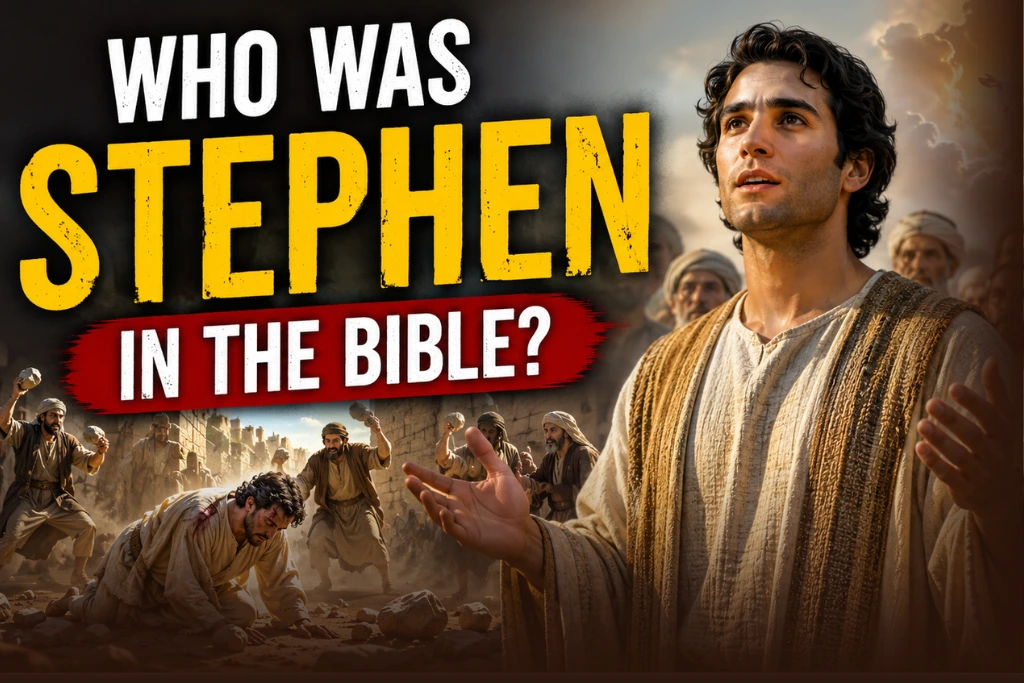
Stephen’s name first appears in a passage that could have easily been about food logistics. The early church was multiplying, and a complaint surfaced: Greek-speaking Jewish widows were being missed in the daily distribution. The apostles, determined to protect their calling to prayer and the ministry of the word, asked the believers to select seven men to handle the practical serving. Stephen was one of the seven.
Right there, tucked into what looks like an administrative fix, you meet a man whose life would burn bright and brief. In only two chapters, Stephen moves from table server to the first person to die for publicly declaring Jesus as Lord. That’s the short answer to who was Stephen in the Bible. But the short answer doesn’t do him justice.
I want to slow down and walk through Stephen’s story the way the book of Acts tells it — not borrowing from outside sources, just sitting inside the text and letting it speak. Get your daily Bible verses at jesusverseoftheday.com
Overview of Stephen’s story
| Category | Detail | Scripture Reference |
| Who He Was | One of the seven chosen to serve widows; a man full of faith and the Holy Spirit | Acts 6:5 |
| Role in the Church | Appointed to oversee daily food distribution so the apostles could focus on prayer and preaching | Acts 6:1-6 |
| Reputation | Known to be full of grace and power; performed great wonders and signs among the people | Acts 6:8 |
| Opposition | Members of the Synagogue of the Freedmen argued with him but could not match his Spirit-given wisdom | Acts 6:9-10 |
| False Charges | Accused of speaking blasphemy against Moses, the law, and the temple | Acts 6:11-14 |
| His Appearance at Trial | His face looked like the face of an angel before the Sanhedrin | Acts 6:15 |
| His Speech | Delivered the longest sermon in Acts (52 verses), tracing Israel’s history and accusing the leaders of resisting the Holy Spirit and killing the Righteous One | Acts 7:1-53 |
| Vision Before Death | Saw heaven open and Jesus standing at the right hand of God | Acts 7:55-56 |
| Death | Dragged outside the city and stoned; the first Christian martyr | Acts 7:57-58 |
| Final Words | “Lord Jesus, receive my spirit” and “Lord, do not hold this sin against them” | Acts 7:59-60 |
| Connection to Paul | Witnesses laid their coats at the feet of Saul (later Paul), who approved of the killing | Acts 7:58; 8:1 |
| Immediate Aftermath | A great persecution scattered the church throughout Judea and Samaria, spreading the gospel | Acts 8:1-4 |
| Lasting Impact | His martyrdom planted seeds for Paul’s conversion; his example of forgiveness and boldness endures | Acts 22:20; throughout Christian history |
A Man Full of the Spirit, Chosen to Serve (Acts 6:1-7)
The apostles didn’t pick Stephen. The congregation did. That detail matters. The twelve gave clear qualifications: the men chosen needed to be known to be full of the Spirit and wisdom. Stephen is introduced as “a man full of faith and of the Holy Spirit” (Acts 6:5).
I notice that his qualifications weren’t primarily skill-based. There’s no mention of administrative genius or prior leadership. The measure was character and spiritual maturity. Stephen had a reputation for being filled with God. That’s what made him the right person to make sure widows weren’t overlooked.
After the seven were presented and prayed over, the word of God spread and the number of disciples in Jerusalem increased rapidly. Even a large number of priests became obedient to the faith. So Stephen’s appointment wasn’t a side note. It was part of a fresh surge of gospel growth.
More Than a Table Server (Acts 6:8)
Acts 6:8 shifts the spotlight. Stephen, now fully introduced, starts doing more than distributing bread. The text says he was “full of God’s grace and power” and “performed great wonders and signs among the people.”
Nothing in the job description required miracles. The apostles had hands laid on him for service, not for signs and wonders — at least not explicitly. Yet God’s power showed up anyway. That tells me Stephen didn’t confine God to a job title. He simply walked in the fullness of the Spirit he already had, and God worked through him.
This part of Stephen’s story quietly challenges the line we sometimes draw between “practical service” and “spiritual ministry.” Stephen was a deacon before the office formally existed, yes. But he was also an evangelist. A wonder-worker. A bold witness. Not because he was promoted, but because he was available.
The Opposition Begins (Acts 6:9-15)
Trouble started with an argument. Members of the Synagogue of the Freedmen — likely Greek-speaking Jews from various regions — began to dispute with Stephen. But they couldn’t stand against the wisdom the Spirit gave him as he spoke.
When they couldn’t win with words, they resorted to lies. They secretly persuaded men to claim Stephen had spoken blasphemy against Moses and God. They stirred up the people, the elders, and the teachers of the law. Stephen was seized and brought before the Sanhedrin.
The false witnesses twisted Stephen’s words. They claimed he said Jesus would destroy the temple and change the customs of Moses. I find it striking how similar this was to the accusations thrown at Jesus. Stephen was walking the same path his Master walked.
And then comes the detail I can never shake: “All who were sitting in the Sanhedrin looked intently at Stephen, and they saw that his face was like the face of an angel” (Acts 6:15). Stephen wasn’t panicked. He wasn’t lashing out. His face reflected something unearthly. In that moment, the Holy Spirit’s presence was so thick on him that even his enemies noticed something different.
The Longest Speech in Acts (Acts 7:1-53)
When the high priest asked if the charges were true, Stephen didn’t give a yes or no. He gave history. Fifty-two verses of it. That might feel like a strange choice to modern readers, but Stephen was doing something deliberate.
He started with Abraham. Then Joseph. Then Moses. He traced the story of Israel from the patriarchs through the exodus, the golden calf, the tabernacle, and the temple. He quoted the prophets. He reminded the council of how their ancestors had repeatedly rejected the ones God sent to rescue them — Joseph was sold by his brothers, Moses was initially rejected, and the prophets were persecuted.
The whole speech builds to a fiery conclusion. Stephen looks at the religious leaders and says: “You stiff-necked people! Your hearts and ears are still uncircumcised. You are just like your ancestors: You always resist the Holy Spirit!” (Acts 7:51). He then delivers the knockout: they betrayed and murdered the Righteous One, Jesus, whom the prophets foretold.
Stephen wasn’t defending himself. He was delivering a prophetic word. He showed that the problem wasn’t the temple or the law. The problem was hearts that refused to recognize what God was doing. The same God who gave the law and filled the tabernacle had now come in Jesus, and they missed it.
I think Stephen knew what this speech would cost him. But he also knew what he had seen and heard. He couldn’t soften the truth to save his skin.
Heaven Opens, Stones Fall (Acts 7:54-60)
The council’s reaction was fury. They gnashed their teeth. And then something happened that only Luke records. Stephen, full of the Holy Spirit, looked up and saw heaven open and Jesus standing at the right hand of God.
He said it out loud: “Look, I see heaven open and the Son of Man standing at the right hand of God” (Acts 7:56). That was the final straw. They dragged him out of the city and began to stone him.
I’m always arrested by that word “standing.” Throughout the New Testament, Jesus is usually described as seated at God’s right hand, a picture of finished work and authority. But here He stands. The text doesn’t explain why, but it’s hard not to see it as an act of welcome — the risen Lord rising to receive His faithful servant.
As the stones struck, Stephen prayed two prayers that echo Jesus on the cross: “Lord Jesus, receive my spirit” and “Lord, do not hold this sin against them” (Acts 7:59-60). Then he fell asleep. That’s the gentle biblical way of saying he died, but not permanently. Death for Stephen was rest in the arms of the One he saw standing.
One more detail: the witnesses laid their coats at the feet of a young man named Saul. This is the first appearance of the man who would later become the Apostle Paul. Stephen’s death and Saul’s violent approval of it are tied together in the narrative, and that connection matters deeply for what happens later in Acts.
The Scattering and the Seed (Acts 8:1-4)
Stephen’s death triggered a great persecution against the church in Jerusalem. On the surface, it looked like disaster. Believers were scattered throughout Judea and Samaria. But that scattering became a spreading. Those who were scattered preached the word wherever they went.
What looks like a loss in the moment becomes a gain in God’s storyline. Stephen’s blood wasn’t the end. It was a beginning. The gospel crossed borders because the church was forced to move. I can’t help but think that Stephen, had he lived, would have rejoiced to see that fruit.
And Saul? He ravaged the church, entering house after house, dragging off believers. But Acts 9 tells us that the same Saul would meet the risen Jesus on the road to Damascus. Stephen’s prayer for forgiveness over his killers may have been answered, in part, in the conversion of the man holding the coats.
What Stephen’s Life Teaches Me
There’s no way to read Stephen’s story and walk away unchanged. He only occupies two chapters, but they’re packed. Here are the lessons I carry from his life:
Service is a platform for the Spirit. Stephen’s official task was to serve tables. That didn’t stop God from doing miracles through him. The Spirit doesn’t need a title to move. He just needs a yielded person.
Courage flows from being full of God, not from trying harder. Stephen didn’t psych himself up before the Sanhedrin. He was already full of the Spirit. The boldness came from the overflow. That’s a reminder to seek filling, not just nerve.
Knowing the Scriptures can prepare you for your hardest moment. Stephen’s speech shows a mind saturated with the Old Testament. He could trace God’s pattern across generations. That depth didn’t come from a quick devotion. It came from a life steeped in the Word.
Death is not the end for those in Christ. Stephen saw Jesus standing. He entrusted his spirit. He fell asleep. That vision of hope doesn’t make stoning painless, but it does make it bearable. The grave doesn’t win.
FAQ’s
Who was Stephen in the Bible in simple terms?
Stephen was one of the seven men chosen by the early church to oversee food distribution to widows. He was known for being full of the Holy Spirit and faith, performed wonders, and gave a powerful speech before the Jewish ruling council. He became the first Christian martyr, killed by stoning for his testimony about Jesus.
Where is Stephen’s story found?
His story is told in Acts 6:1 through Acts 8:3. Chapter 6 describes his selection and arrest, chapter 7 records his long speech and death, and the beginning of chapter 8 shows the fallout — persecution and scattering.
What did Stephen do to make people so angry?
Members of a synagogue argued with him and couldn’t match his wisdom. They falsely accused him of blasphemy against Moses, the law, and the temple. In his defense before the council, Stephen didn’t back down but boldly accused the leaders of resisting the Holy Spirit and killing Jesus, which enraged them.
Why did Stephen see Jesus standing and not sitting?
The Bible does not explain the posture directly, but many readers see it as Jesus rising in honor to welcome Stephen home. Elsewhere, Jesus is described as seated at God’s right hand, so standing here feels intentional — a gesture of recognition for the first martyr.
What does Stephen’s death have to do with the Apostle Paul?
Saul of Tarsus, later known as Paul, was present at Stephen’s stoning, approving of the execution and watching over the coats of those throwing stones. Stephen’s death left an imprint on Paul, who later referenced it in his own testimony (Acts 22:20). Many believe Stephen’s Christlike forgiveness planted a seed in Paul’s heart.
Did Stephen’s death serve any purpose?
Humanly speaking, it looked like a tragedy. But the persecution that followed scattered believers throughout Judea and Samaria, spreading the gospel beyond Jerusalem. Stephen’s death also became a powerful example of faithful witness, and it set the stage for Paul’s eventual conversion.
What were Stephen’s last words?
He prayed two things: “Lord Jesus, receive my spirit” and “Lord, do not hold this sin against them” (Acts 7:59-60). Both echo Jesus’ own words from the cross, showing that Stephen was fully united with his Savior in death.
How is Stephen described in the Bible?
He is described as a man full of faith and the Holy Spirit, full of God’s grace and power, and having a face like an angel during his trial. His life was marked by wisdom that confounded opponents and courage that didn’t crack under pressure.
Why was Stephen chosen to serve tables?
The apostles needed trustworthy men to handle food distribution so they could focus on preaching. Stephen was selected by the congregation because he met the spiritual qualifications: he was known to be full of the Spirit and wisdom. His character, not his résumé, made him the right choice.
Does the Bible mention anything about Stephen before Acts 6?
No. The book of Acts introduces him without a backstory. His entire biblical biography is contained in the moment of his appointment, his ministry, his trial speech, and his death. There is no information about his life before he appears in Jerusalem.
Amen 🙏